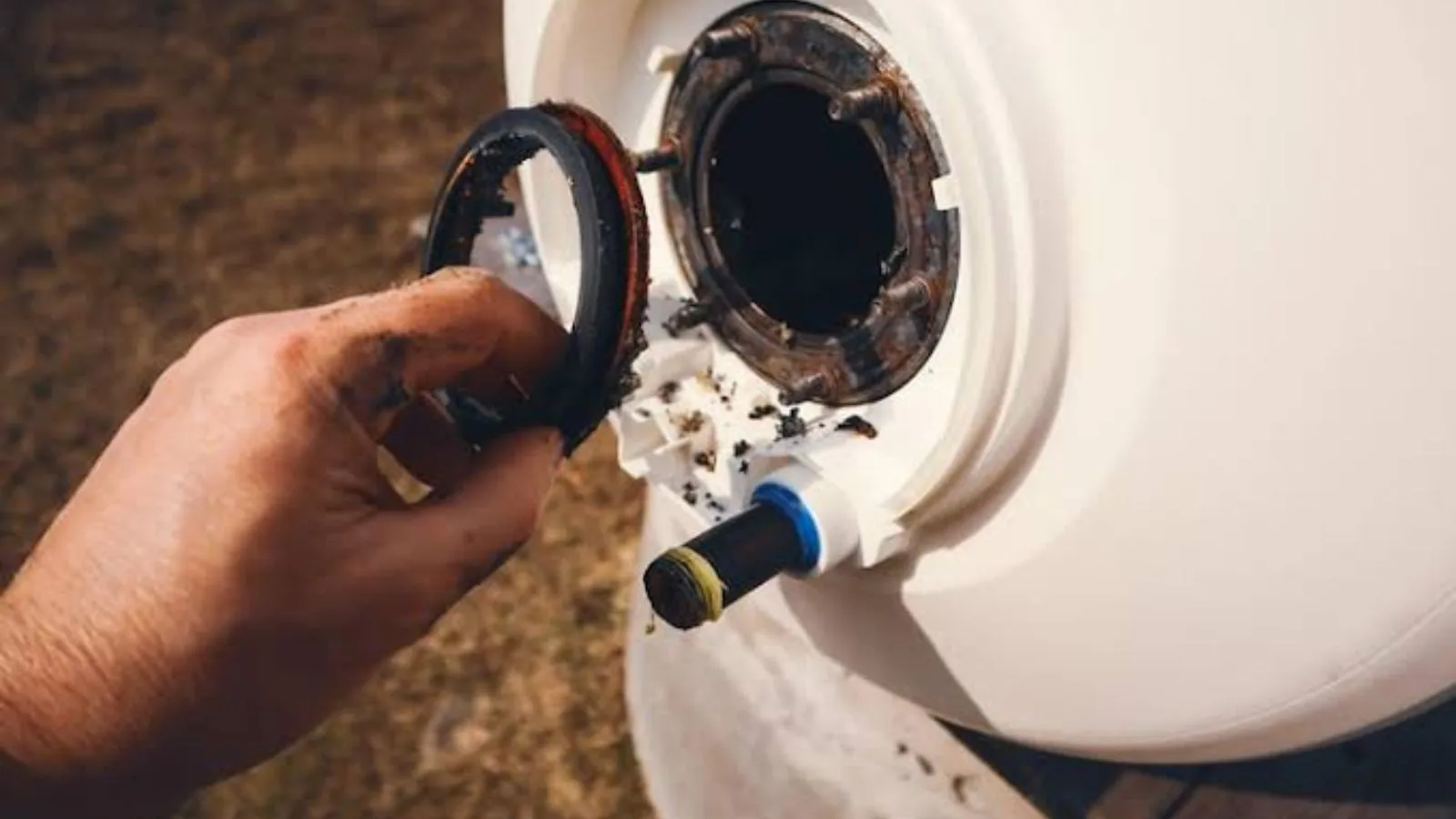
If your water heater is leaking, close the cold water supply valve on top of the tank and call the 24/7 line. If the heater is electric, switch off its breaker only if the panel is dry. If it is gas, turn the gas control to off. Stay out of standing water.
Water heater leak cleanup is the removal of water released by a failed tank, a loose fitting or a relief valve, plus the drying of the finished space around it. A tank holds 40 to 50 gallons, and a full failure puts all of it on the floor.
Water heater emergency: first steps before crews arrive
Safe steps after a tank leak
- Shut the cold supply valve above the heater. Turn the handle clockwise until it stops.
- Switch the heater off at the breaker or the gas control so the burner or element does not run dry.
- Do not touch outlets, cords or appliances that sit in the water.
- Move rugs, boxes and furniture off wet floors to dry ground.
- Photograph the heater label, the leak and the wet area before anything is moved.
Do not drain the tank until a plumber has looked at it. If hot water is still pouring out, keep clear. It can scald.
Why water heaters fail and where the water goes
Tanks wear out from the inside. A typical tank lasts roughly a decade, sometimes more. Sediment, a worn anode rod and a stuck relief valve all shorten that. Leaks from fittings, the drain valve or the pan line are smaller but can run for weeks.
Most Woodridge houses were built between 1970 and 1999. Many have a water heater in a basement utility area or a closet on the main floor. Water from a basement unit runs to the lowest drain and soaks the wall bottoms, boxes and any finished flooring.
| Leak source | Typical damage | Cleanup focus |
|---|---|---|
| Tank failure | Large volume across the floor and into walls | Extraction, wall base drying, subfloor checks |
| Relief valve or discharge pipe | Slow wetting near the unit | Find the cause, dry the pan and floor edge |
| Fitting or drain valve | Damp wall and cabinet base | Moisture mapping, replace wet drywall base |
| Closet unit on a finished floor | Wet carpet, pad or hardwood | See carpet or hardwood pages for floor handling |
What happens during cleanup
Crews pump out standing water, remove wet carpet and pad when needed and open the lowest part of any soaked wall. Air movers and dehumidifiers dry the rest. Moisture readings are logged every day until the structure meets a dry standard.
A plumber replaces the heater. Cleanup runs alongside that work. If the water reached the floor below, the water extraction page explains how pumping and drying are done in larger spills.
See basement water damage cleanup if the heater sits below grade, and appliance leak water damage for other fixtures.
What affects water heater leak cleanup cost
- Volume of water and how long it ran before being found.
- Whether the heater sits in a basement, a closet or a garage.
- Floor type, since carpet, tile and hardwood dry differently.
- How many feet of wall base are wet.
- Drying days and equipment count.
Want your real number? Describe where the heater is and what the floor is made of. The scope and price are explained before work starts.
Call (630) 580-6401A sudden tank failure is often covered by homeowners insurance. Slow leaks and wear are often not. Check your policy and call your insurer before repairs begin.
Water heater leak questions from Woodridge homeowners
Yes. The line is open 24/7, including holidays. Shut the supply valve, call, and the dispatcher will arrange same-day response when available. No arrival time is promised.
Yes, if the breaker panel is dry and you can reach it without standing in water. For gas units, turn the gas control to off. If you cannot do this safely, stay back and call.
A standard tank holds about 40 to 50 gallons. A full failure releases most of it quickly and can spread across a finished basement floor.
Sudden tank failure is often covered for the water damage, though the heater itself usually is not. Slow leaks and wear are frequently excluded. Read your policy and ask your insurer.
A small, clean spill on a hard floor can be mopped and fanned. Anything that reached carpet, pad, drywall or a wall cavity needs moisture readings, because it can stay wet inside.
Do not wait for drying. A plumber can replace the heater while crews dry the area. Keep the old unit's label for your claim.
Sources and standards: the ANSI/IICRC S500 Standard for Professional Water Damage Restoration, which defines water categories, drying classes and goals, and consumer guidance from the Illinois Department of Insurance on homeowners coverage. These are general references and not a promise of coverage or a result.