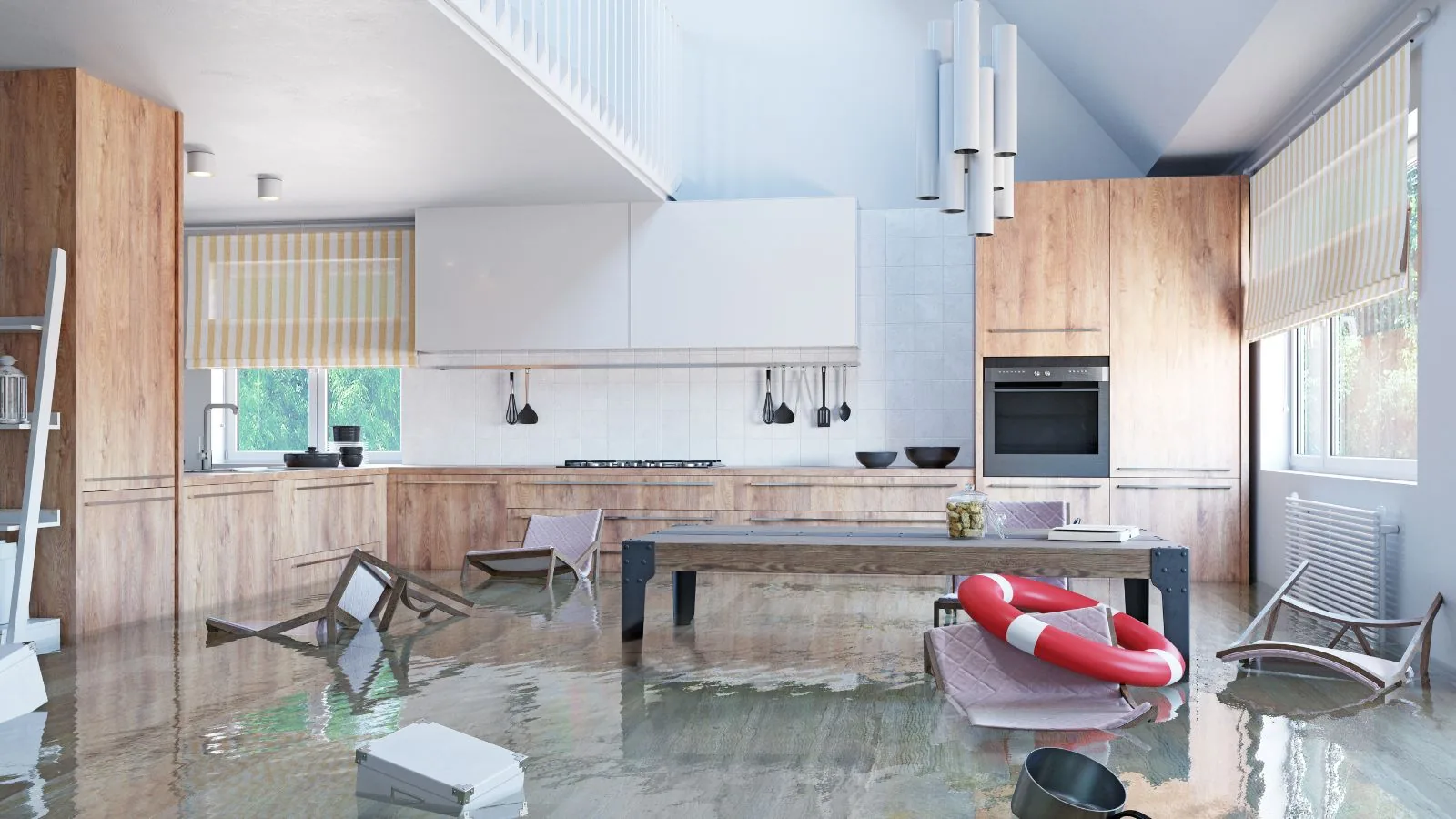
If your kitchen has a leak, close the shutoff under the sink or the appliance valve, then call. Remove items from the lower cabinets so they can be checked. Kitchens hold many materials that react differently to water.
Kitchen water damage restoration is the drying, cleaning and repair of cabinets, floors, walls and counters after a leak from a sink, dishwasher, refrigerator line or drain. It is often a layered job because several materials are wet at once.
Where kitchen water goes
| Material | Reaction to water | Usual outcome |
|---|---|---|
| Particleboard cabinet base | Swells and crumbles | Replace |
| Solid wood cabinets | Can dry if caught early | Dry and inspect |
| Laminate or vinyl floor | Seams swell, edges lift | Often replaced |
| Tile floor | Surface stays, subfloor wet | Dry underlayment |
| Drywall behind cabinets | Soaks and softens | Open and dry or replace |
Water often runs under the cabinets and into the subfloor. A floor that looks dry can still be wet below. Moisture meters and thermal imaging show the route.
What to do right after a kitchen leak
- Shut the valve under the sink or behind the appliance.
- Unplug countertop appliances and keep cords out of the water.
- Empty the lower cabinets so they can dry.
- Do not use the dishwasher or the disposal until the leak is fixed.
- Photograph the cabinets, floor and the source of the leak.
Common kitchen leak sources
- Sink supply lines and drain traps.
- Dishwasher hose and door seal.
- Refrigerator ice maker line.
- Garbage disposal seals.
- A pipe in a wall behind the sink.
For appliance-specific tips see appliance leak water damage. For a long-running leak that has soaked the subfloor, structural drying explains how deep moisture is removed.
How kitchen restoration works
Crews extract water, remove toe kicks and drill small drainage holes where needed. Wet insulation and drywall come out. Dehumidifiers and air movers run until readings are dry. Then repairs begin: cabinet bases, floors, trim and paint.
Because cabinets and counters are costly, ask what can be dried in place and what must be replaced. A good plan separates the two.
The hidden parts of a kitchen leak
A kitchen holds water in places you rarely see. Insulation behind cabinets, the dishwasher cavity, the toe kick and the subfloor under the sink can all stay wet after the visible mess is wiped up. Water also follows plumbing chases into the wall.
- Pull the toe kick and check the cabinet base for swelling.
- Look under the sink for stains on the floor of the cabinet.
- Check the wall behind the dishwasher and refrigerator.
- Smell the cabinet interior for mustiness.
- Look for lifted flooring edges near the sink.
A thermal camera can show cold, wet areas behind a finished surface. Moisture readings then confirm what the camera suggests.
Countertops and appliances
Granite, quartz and laminate surfaces rarely need replacement unless water got under them and swelled the cabinet below. Appliances such as dishwashers and refrigerators should be inspected before use if they sat in water. Electrical parts and controls are the main concern.
Planning the kitchen rebuild
Plan the rebuild after the cabinets and floor are dry. Ordering cabinets can take weeks, so decide early whether to replace a single base unit or a run. Photograph the original layout so a replacement matches. Ask your contractor about permits for plumbing or electrical changes.
A leak from the wall behind the sink is covered on wall and drywall water damage repair.
What affects kitchen restoration cost
- Source and duration of the leak.
- Cabinet material and how much is swollen.
- Flooring type and how much must come up.
- Drywall and insulation removed.
- Drying days, then rebuild scope.
Want your real number? Call with the leak source and the cabinet and floor type. The scope and price are explained before work starts.
Call (630) 580-6401Sudden leaks are often covered by homeowners insurance. Slow leaks and wear often are not. Photograph the damage and read your policy.
Kitchen water damage questions from Woodridge homeowners
Solid wood cabinets caught early often can. Particleboard and MDF swell and rarely recover. A moisture meter helps decide.
Shut off the water at the valve, remove items from wet cabinets and call for drying. Do not run the dishwasher or sink.
Tile often stays with the subfloor dried underneath. Laminate and vinyl commonly come up. Hardwood depends on how long it was wet.
Usually three to five days. Deep subfloor moisture takes longer.
Sudden leaks are often covered. Gradual leaks and wear usually are not. Ask your insurer.
Yes. A plumber fixes the leak. Drying and repair run alongside that work.
Sources and standards: the ANSI/IICRC S500 Standard for Professional Water Damage Restoration, which defines water categories, drying classes and goals, and consumer guidance from the Illinois Department of Insurance on homeowners coverage. These are general references and not a promise of coverage or a result.