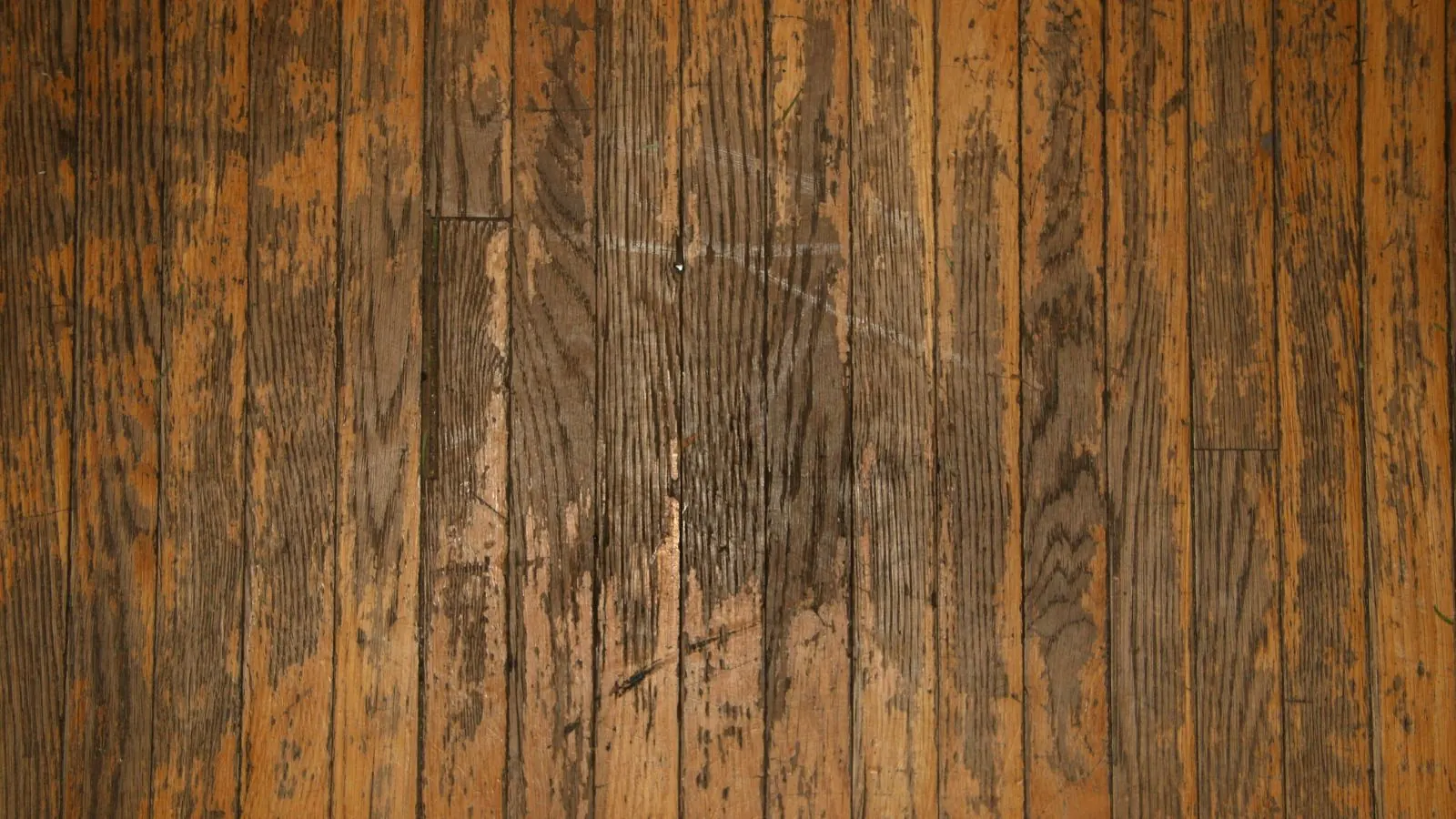
If your hardwood floor is wet, dry it quickly. Move rugs and furniture, open windows only if humidity is low and call for drying. Time matters. Boards can cup within a day and buckle within days.
Hardwood floor water damage repair is the drying, sanding and refinishing or replacement of wood flooring after a leak, flood or spill. The goal is to save boards when moisture is removed in time.
Signs of water damage in hardwood
- Cupping: edges rise higher than the center.
- Crowning: the center rises above the edges.
- Buckling: boards lift away from the subfloor.
- Dark stains or black marks, often at seams.
- A musty smell from under the floor.
Cupping often reduces after drying. Buckling usually means the floor must be replaced in sections.
What to do on a wet hardwood floor
- Wipe up water and remove rugs, mats and furniture.
- Do not use a steam cleaner or iron to dry the floor.
- Do not use heat guns or space heaters on the boards.
- Keep the room ventilated and run a dehumidifier.
- Photograph cupping or buckling before it is repaired.
Drying hardwood with the right tools
Floor drying mats and air movers pull water from beneath and between boards. Meters track the moisture content of the wood. Drying is slow and controlled, since drying too fast can split boards.
| Condition | Likely outcome | Next step |
|---|---|---|
| Light cupping caught early | Often flattens as it dries | Dry, wait, sand if needed |
| Moderate cupping | May need sanding after drying | Dry fully, then refinish |
| Buckling | Boards often replaced | Remove affected boards, dry the subfloor |
| Black stains | Water sat for too long | Replace affected boards |
Sanding, refinishing and replacement
After the wood is dry, a flooring contractor decides whether to sand and refinish or replace boards. Matching the stain and species is part of the job. Engineered wood and solid wood respond differently.
If water came from a kitchen leak, see kitchen water damage restoration. For water under a slab floor, see slab leak water damage.
What to do in the first hours
Hardwood reacts fast. Soak up water with towels, remove rugs and furniture and lift anything that traps moisture against the boards. Do not use heat to dry the floor. Strong heat can cause cracks, splits and permanent gaps.
- Wipe up standing water immediately and keep the area ventilated.
- Remove furniture feet that sit in wet spots.
- Pull up area rugs and underlay.
- Keep the room at a normal temperature and run a dehumidifier.
- Avoid walking on cupped boards, which can split the finish.
Dry slowly. A floor that dries too fast can crack. Technicians use controlled airflow and mats, then watch the readings until the boards return to their normal moisture range.
Solid wood versus engineered wood
Solid hardwood can often be sanded and refinished more than once, which gives it a second chance after cupping. Engineered wood has a thin top layer over plywood. If that layer lifts or the plywood swells, sanding may not be possible and replacement is more likely.
Ask a flooring contractor to check the finish after drying. A floor that has been wet can show white haze, raised grain or gaps at the seams, which sanding and refinishing can often correct.
If only a few boards are damaged, they can be replaced and blended into the surrounding floor. Matching the stain is the hardest part, so ask to see a sample before the work is done.
Boards soaked by outside water are covered under flood damage cleanup.
What affects hardwood repair cost
- Square footage of wet flooring.
- How long the wood stayed wet.
- Solid or engineered construction.
- Drying days and equipment such as mats.
- Sanding, refinishing or board replacement afterward.
Want your real number? Call with the floor type and the size of the wet area. The scope and price are explained before work starts.
Call (630) 580-6401Sudden water from a pipe or appliance is often covered. Gradual seepage often is not. Photograph the floor and read your policy.
Hardwood floor questions from Woodridge homeowners
Often, if it is dried quickly and slowly. Light cupping usually improves. Buckled or blackened boards usually need replacement.
Cupping can start within a day. Buckling takes longer but can happen in a few days if water stays.
No. Wait until the boards and subfloor are fully dry. Sanding wet wood can lock in problems.
Not always. Layered construction can delaminate. Moisture readings decide.
Sudden leaks often are covered. Slow leaks and maintenance issues often are not. Check your policy.
Several days to a few weeks, depending on how wet it got and how thick the boards are.
Sources and standards: the ANSI/IICRC S500 Standard for Professional Water Damage Restoration, which defines water categories, drying classes and goals, and consumer guidance from the Illinois Department of Insurance on homeowners coverage. These are general references and not a promise of coverage or a result.