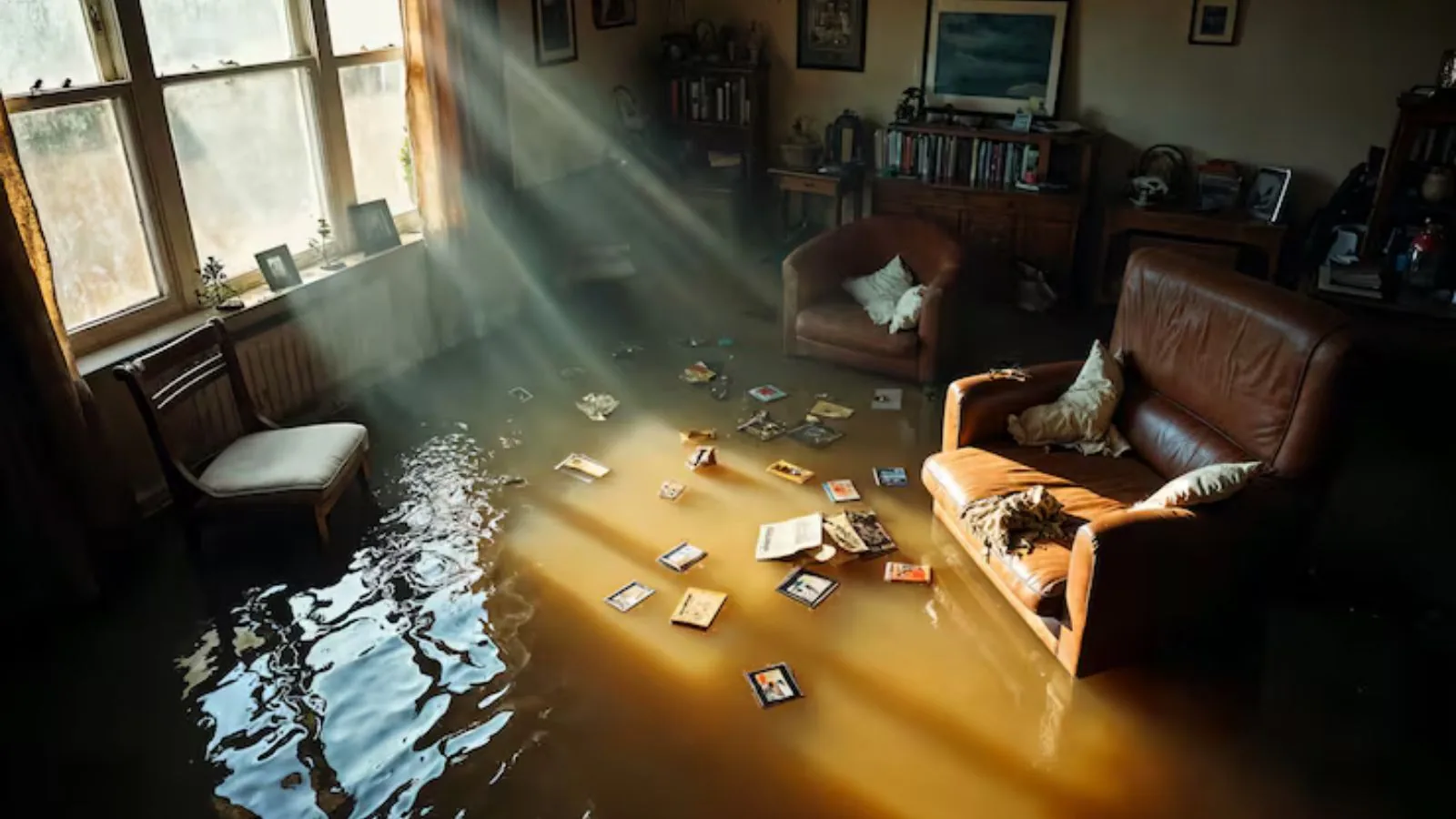
If flood water is in your home, leave the wet area, keep children and pets out and call the 24/7 line. Do not wade through it, and do not touch electrical equipment standing in it. The line is open nights, weekends and holidays.
Flood damage cleanup removes water that entered from outside, then cleans, sanitizes and dries what it touched. Flood water is classed as Category 3 under the ANSI/IICRC S500 standard because of what it carries from yards, streets and storm drains.
Flood emergency: what makes this different from a pipe leak
A burst pipe starts clean. Flood water does not. It can carry soil, sewage, fuel, pesticides and bacteria. Porous materials such as carpet, pad, insulation and drywall that were soaked are usually removed rather than dried.
Safety rules for flood water
- Stay out of standing water. Treat it as contaminated and possibly electrified.
- Leave the breaker panel alone unless it is dry and you can reach it without standing in water.
- Wear boots and waterproof gloves if you must walk through a wet area.
- Do not run gas generators indoors. Carbon monoxide is a real danger after storms.
- Photograph the water line before anything is moved or thrown away.
River and surface flooding near Woodridge
The East Branch DuPage River flows near Seven Bridges. The National Weather Service tracks it at a gauge near Bolingbrook. The record crest there was 25.54 feet on April 18, 2013. The gauge's impact list names Hobson Road at 24.5 feet and lists residences in Seven Bridges as threatened at 26 feet.
That record fell just short of the 26-foot level. It still shows how close the river can come. If you live near the river, check the gauge during heavy rain, move valuables upstairs early and look up your address on the FEMA Flood Map Service Center.
| Category | Source examples | Typical handling |
|---|---|---|
| Category 1 | Supply line leak, clean rain through a roof | Extract and dry, many materials can be saved |
| Category 2 | Washing machine overflow, dishwasher discharge | Extract, clean, dry, remove porous items if wet too long |
| Category 3 | River flood, sewage, ground surface water | Protective gear, remove porous materials, sanitize, dry |
How flood cleanup works, step by step
Crews pump out water, remove soaked carpet, pad and drywall, then clean and sanitize hard surfaces. Air movers and dehumidifiers dry framing and subfloor. Readings are logged each day.
Contents are sorted into what can be cleaned and what cannot. Photographs of items and their condition help your claim. For water that comes up through a floor drain, the sewage backup cleanup page covers extra safety rules.
Flood insurance is separate from homeowners insurance
Standard homeowners policies usually exclude flood. The Illinois Department of Insurance says flood needs its own policy. Check your policy for a sewer or water backup endorsement as well. Ask your agent before the next storm, because most flood policies have a waiting period.
For pumping out standing water first, see water extraction.
Parts of Woodridge sit near the East Branch DuPage River. Check your address on the FEMA map, and see Seven Bridges for what the river gauge notes say about that area.
What affects flood cleanup cost
- Water category, because Category 3 work needs protective gear and disposal.
- Depth of the water and how many floors or rooms it reached.
- How much carpet, pad, drywall and insulation must be removed.
- Drying days and the amount of equipment needed.
- Contents handling and rebuild scope, which are priced separately.
Want your real number? Call with the water depth and the rooms affected. The scope and price are explained before work starts.
Call (630) 580-6401After the structure is dry, basement water damage cleanup covers the lower level that flood water reaches first.
Flood cleanup questions from Woodridge homeowners
Yes. The line is open 24/7, including during storms. Call from a dry place, follow the safety steps and the dispatcher will arrange same-day response when available. No arrival time is promised.
Yes. Flood water can carry bacteria and chemicals that are not visible. Treat it as contaminated, wear boots and gloves and wash well after contact.
Standard policies usually exclude flood. A separate flood policy or an endorsement is needed. Ask your insurer what your policy covers, and see the Illinois Department of Insurance for consumer guidance.
Porous materials that were soaked by flood water, such as carpet, pad, drywall and insulation, are commonly removed. Hard surfaces and solid wood can often be cleaned and dried. A crew checks each material.
Use the FEMA Flood Map Service Center with your address, and watch the National Weather Service river gauge for the East Branch DuPage River. Ask the Village for local drainage guidance.
Water removal takes hours. Drying and cleanup usually take several days. Rebuilding takes longer and is a separate scope.
Sources and standards: the ANSI/IICRC S500 Standard for Professional Water Damage Restoration, National Weather Service river gauge data for the East Branch DuPage River near Bolingbrook, the FEMA Flood Map Service Center and the Illinois Department of Insurance. Gauge values were read from a mirror of the NWS page.