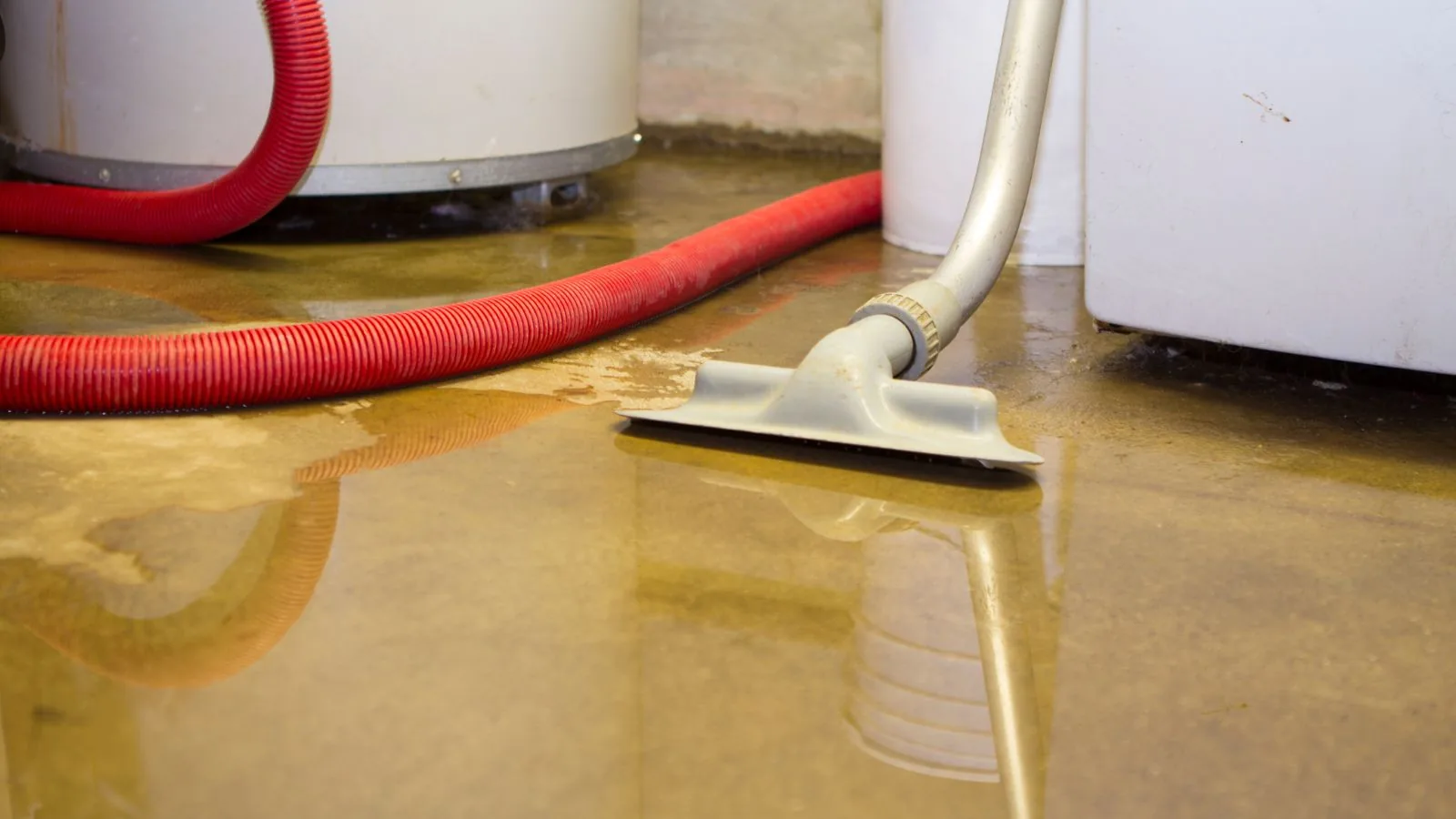
Signs of a sewer backup in your house
A sewer backup shows up as water rising from the lowest drain, usually in a basement floor drain, shower or toilet. Gurgling sounds, slow drains in several fixtures and a sewage smell are the warning signs.
- Water or sewage coming up from the floor drain or a basement toilet.
- Several drains slow or gurgling at once.
- A strong sewage smell near a drain.
- Dark water standing in a laundry tub or shower.
If you see any of these, stop using water. Do not flush, run the washer or use the dishwasher. Every flush can add to the backup.
Sewage emergency: stay out and call
Sewage is Category 3 water under the ANSI/IICRC S500 standard. It carries bacteria, viruses and parasites. Keep children, pets and anyone with a weak immune system out of the area. Do not touch it without boots and gloves.
Safe steps while you wait
- Stop using sinks, toilets, tubs and the washing machine.
- Keep people and pets out of the wet area.
- Leave electrical equipment alone if the floor is wet.
- Open a window if it is safe, but do not run a household fan in sewage.
- Photograph the water and the drain for your claim.
Call a plumber to find a blockage. Call the line for removal. If the blockage is in the public main, contact the sewer operator. Most of Woodridge is served by the Village's Public Works, and parts of town fall under the Downers Grove Sanitary District, reachable at 630-969-0664.
Who owns the line and why it matters
A homeowner owns the lateral from the house to the property line or the main. The utility owns the main. Roots, grease, collapsed pipe and heavy storm flow all cause backups. If other homes on your street have the same problem, it is probably the main.
| Cause | Typical sign | Who fixes it |
|---|---|---|
| Clog in the house line | Only your home affected | Plumber |
| Roots or collapsed lateral | Repeat backups | Plumber, sometimes with a camera |
| Blockage in the main | Neighbors affected too | Public Works or the sanitary district |
| Heavy storm flow | Backups during or after big rain | See storm and flood pages |
How sewage cleanup works
Crews wear protective gear, pump out the sewage and remove contaminated porous materials such as carpet, pad, drywall and insulation. Hard surfaces are cleaned and sanitized. Air movers and dehumidifiers dry the rest. See flood damage cleanup for other Category 3 water.
Preventing sewage backups
A few habits reduce backups. Keep grease out of drains, avoid flushing wipes and have a plumber camera the lateral if you have repeat clogs. A backwater valve installed on the lateral can keep sewage from flowing back into the basement during heavy flow.
Lower levels that took on sewage are also covered on basement water damage cleanup, and the drying step is explained under structural drying.
What affects sewage cleanup cost
- Volume of sewage and the area it covered.
- How much porous material must be removed and disposed of.
- Protective gear and disposal requirements.
- Drying days and equipment count.
- Rebuild scope, which is separate.
Want your real number? Call with the room, the amount of water and the floor type. The scope and price are explained before work starts.
Call (630) 580-6401Insurance for sewer backup is often a separate endorsement. The Illinois Department of Insurance says standard policies may exclude it. Check yours before you need it.
Sewage backup questions from Woodridge homeowners
It can be. Water coming up from a floor drain, toilet or tub is usually sewer water. Stop using water, keep people out and call. A plumber will find the cause.
Yes. The line is open 24/7. The dispatcher will explain safety steps and arrange same-day response when available. No arrival time is promised.
Not for anything beyond a very small spill on a hard floor. Sewage carries disease risk. Professionals use protective gear and approved cleaners.
Often only with a water or sewer backup endorsement. Read your policy and ask your agent.
Carpet, pad, drywall and insulation that touched sewage are commonly removed. Hard surfaces can usually be cleaned and sanitized.
Keep grease and wipes out of drains, ask a plumber to scope the lateral and consider a backwater valve. Do not rely on cleaning alone.
Sources and standards: the ANSI/IICRC S500 Standard for Professional Water Damage Restoration, which classes sewage as Category 3 water, and the Illinois Department of Insurance for backup coverage. The Downers Grove Sanitary District number was taken from its public contact listing.