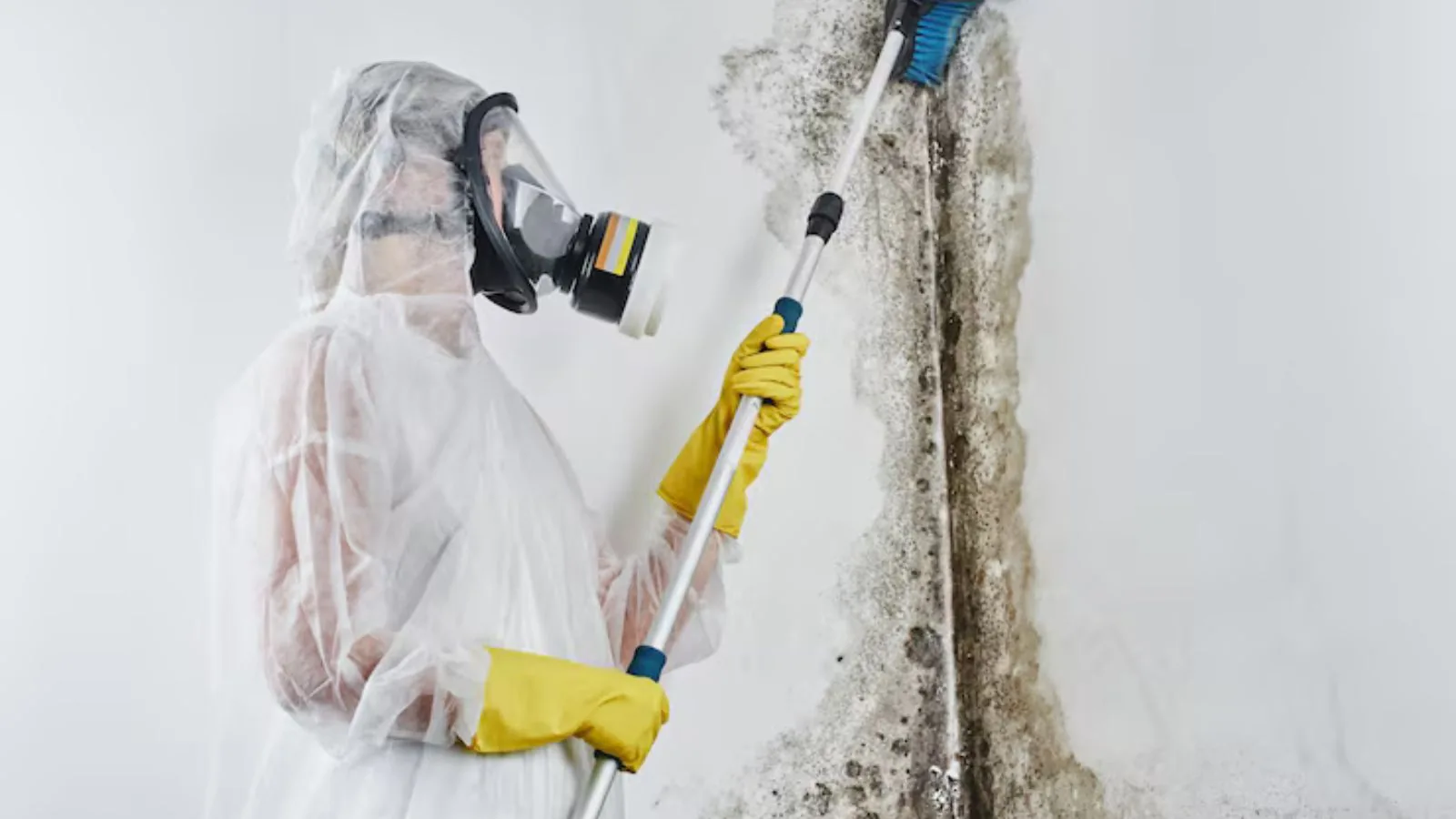
Signs you may have mold after water damage
Mold often follows a leak or flood that was not dried in time. The usual clues are visible spotting, a musty smell, damp materials and areas that stay humid.
- Fuzzy or spotty growth on walls, ceilings, carpet or stored items.
- A musty or earthy smell that returns after cleaning.
- Peeling paint, stains or warped materials near a past leak.
- Condensation on windows or pipes in a basement or crawl space.
- Damp baseboards or wallpaper that will not dry.
Do not scrub or disturb a large area. Fix the water source and call. This page does not discuss health effects. For health concerns, speak to a doctor.
What to do if you see mold
- Fix or shut off the water source first.
- Do not scrub, sand or dry-brush a large area.
- Keep the room closed off and avoid blowing air across it.
- Wear gloves, eye protection and a respirator if you must be near it.
- Photograph the growth and call for help.
What mold remediation involves
Mold remediation is the removal or cleaning of mold-affected materials and the correction of the moisture that caused it. It is different from cleaning a small spot with household products. The steps follow the ANSI/IICRC S520 standard as an industry guide.
The steps of a mold remediation job
- Find the moisture source. Mold needs water, so the leak or humidity must be fixed first.
- Contain the area. Plastic sheeting and negative air machines keep spores from spreading.
- Remove affected materials. Porous items such as drywall and carpet are removed and bagged.
- Clean and treat surfaces. Wood and hard surfaces are cleaned with HEPA vacuums and damp wiping.
- Dry the space. Dehumidifiers and air movers lower moisture to a dry standard.
- Verify. Moisture readings and visual checks show the work is done.
Mold inspection and testing
An inspector looks for moisture and growth, and may take air or surface samples. Testing can show which types are present and at what level, compared with outdoor air. It does not replace fixing the moisture.
Some insurers and lenders ask for a post-remediation report. The inspector should be independent of the company doing the removal, so the same company is not grading its own work.
| Step | Purpose | Who does it |
|---|---|---|
| Inspection | Find moisture and visible growth | Inspector or remediator |
| Testing | Sample air or surfaces | Independent inspector |
| Remediation | Remove growth and fix the moisture | Remediation provider |
| Clearance check | Confirm the work is complete | Independent inspector |
Illinois rules and what to ask a provider
Illinois Public Act 103-0893 created a registration requirement for mold remediation providers with the Illinois Department of Public Health, effective January 1, 2025. Ask any provider about their registration and keep the answer in writing.
- What is the written scope, and where will containment go?
- How will the moisture source be handled?
- Who performs testing and clearance, and is that person independent?
- What will be removed, and what will be cleaned?
- What does the final report include?
For the first step after a leak, see structural drying and dehumidification. For wet basements, see basement water damage cleanup.
If the growth is on a wall that was wet, see wall and drywall water damage repair for how drywall is cut out and replaced.
What affects mold remediation cost
- Area of growth and the number of rooms affected.
- Materials involved, such as drywall, carpet or framing.
- Containment and air filtration needed.
- Testing and clearance, which are usually separate.
- Moisture repair and rebuild, priced separately.
Want your real number? Call with photos and the room involved. The scope and price are explained before work starts.
Call (630) 580-6401Insurance coverage for mold depends on the cause. The Illinois Department of Insurance says mold is covered in some policies when it follows a covered water loss. Read your policy.
Mold questions from Woodridge homeowners
It might be. A musty smell often points to hidden moisture or growth. An inspector can check walls, floors and air with a meter and, if needed, samples.
Small surface spots on hard materials may be wiped. Larger growth, or growth in porous materials, needs professional remediation. Fix the moisture first or it returns.
Not always. Visible growth can be remediated without testing. Testing helps when growth is hidden, when insurers ask or when you want a baseline.
A buyer or lender may ask for documentation. A post-remediation report from an independent inspector is the usual form. Ask your agent or lender what they need.
It depends on the cause and the policy. Mold from a covered water loss may be covered. Many policies limit or exclude it. Ask your insurer.
Small jobs take a day or two. Larger jobs take several days, plus drying and rebuild.
Sources and standards: the ANSI/IICRC S520 Standard for Professional Mold Remediation, Illinois Public Act 103-0893 on mold remediation registration with the Illinois Department of Public Health, and U.S. EPA guidance on mold cleanup. These are general references and not health advice.