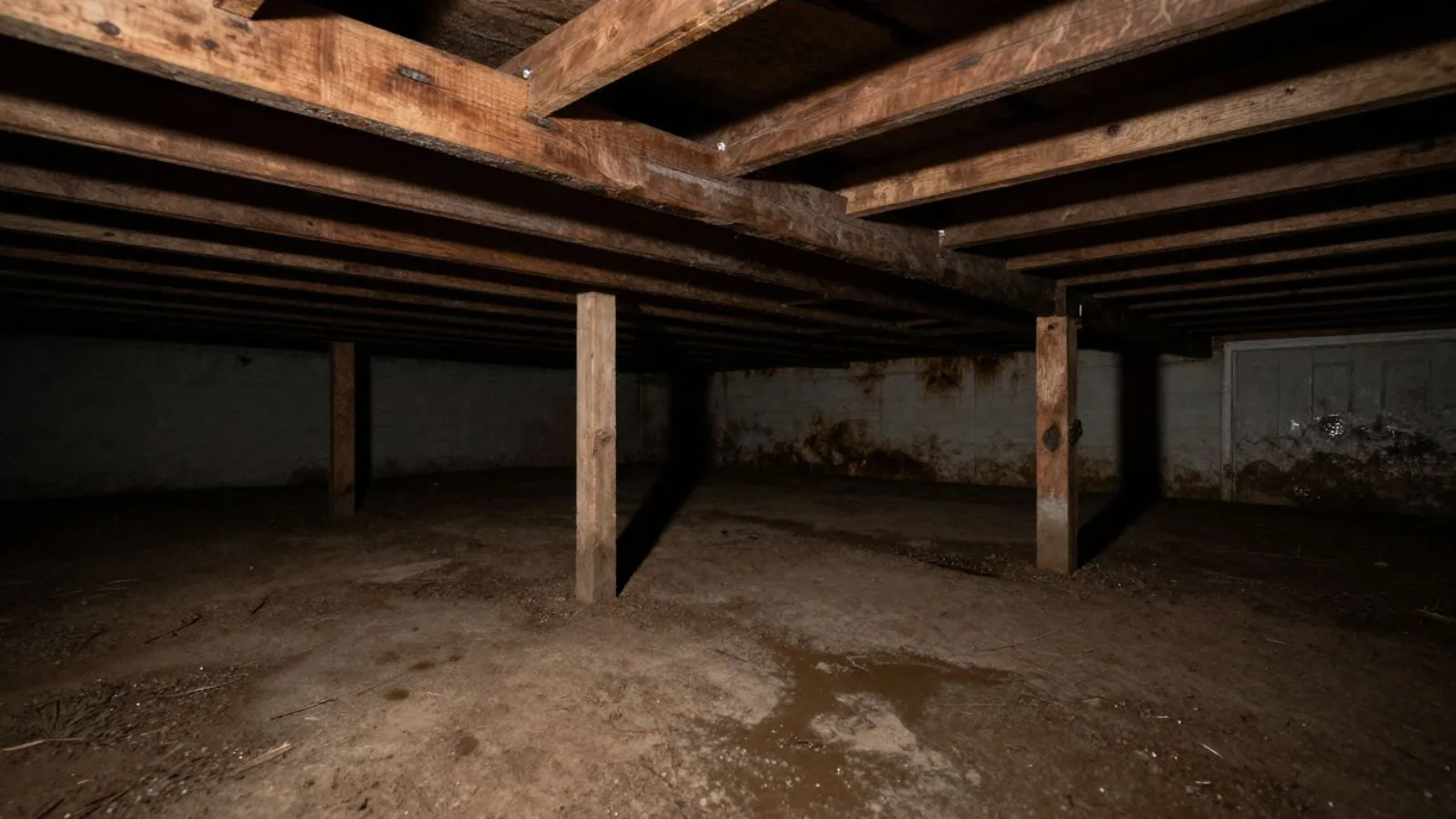
If a crawl space holds water, keep out until the electricity is off. Pumping and drying come first, then the source is found. Many crawl space problems come from outside water, so the grading, gutters and window wells matter too.
Crawl space water damage is the wetting of the space under a floor, its insulation, its framing and its air. Dampness here rises into the house and can reach the floors above.
What causes water in a crawl space
- Surface water from heavy rain or poor grading.
- Gutters and downspouts that dump next to the foundation.
- A plumbing leak under the floor.
- A sump pump that failed or was never installed.
- High humidity and condensation on ducts and pipes.
Woodridge sits in an area that receives about 38 inches of precipitation a year, based on National Weather Service normals for Chicago O'Hare. Saturated ground pushes water toward low foundation spots.
What to do before entering a crawl space
- Turn the power off to the crawl space at a dry panel.
- Do not enter a space with standing water near wiring.
- Wear boots, gloves and a respirator rated for dusty spaces if you must look inside.
- Let someone know you are going in and carry a flashlight.
- Photograph from the opening and call for help.
What a wet crawl space does to a house
| Material | Effect of long wetting | Cleanup action |
|---|---|---|
| Fiberglass insulation | Sags, holds moisture | Remove and replace |
| Wood joists and subfloor | Dampness, staining, softness | Dry, measure, replace if soft |
| Vapor barrier | Torn or soaked | Clean or replace |
| Ducts and pipes | Condensation, rust | Dry and inspect |
Wet crawl spaces send moisture up into the living area. Floors can cup, musty odors can appear and humidity rises in the house.
How crews clean and dry a crawl space
Crews pump out water, remove wet insulation and debris and clean the surfaces. Dehumidifiers and air movers dry the joists and subfloor. A contractor can add a sump pump, a vapor barrier or a drain line to reduce repeat events.
Restoration dries and cleans. It does not waterproof. A sump or drain project is a separate scope. For wet lower levels see basement water damage cleanup. For long-term dampness, mold remediation explains what to ask a provider.
Humidity, odors and the floors above
A damp crawl space does not stay in the crawl space. Warm air rises through gaps around pipes and wiring, and it carries moisture and odor into the rooms above. Homeowners often notice cold floors, a musty smell near the lowest rooms and condensation on ducts.
A moisture meter on the floor joists and subfloor shows whether the wood is above a safe range. A humidity reading in the space helps decide whether a dehumidifier or a vapor barrier is needed.
- Cover bare soil with a heavy plastic vapor barrier, overlapped and sealed at the edges.
- Keep downspouts discharging at least several feet from the foundation.
- Seal gaps around pipes that rise into the living area.
- Check vents and access doors for gaps that let in rain.
- Inspect insulation twice a year for sagging or stains.
For how framing and subfloor are dried, see structural drying.
What affects crawl space cleanup cost
- Water depth and area of the crawl space.
- Access, since tight spaces take longer.
- Amount of insulation and debris to remove.
- Drying days and dehumidifier count.
- Any added moisture control work, priced separately.
Want your real number? Call with the water depth and the access size. The scope and price are explained before work starts.
Call (630) 580-6401Crawl space water from rain or groundwater is often excluded from standard policies. A sudden pipe break is different. Check your policy.
Crawl space questions from Woodridge homeowners
If it is deep or near wiring, yes. Otherwise, call within a day. Water left in place soaks insulation and framing.
Restoration removes water and dries the space. Waterproofing is a separate project from a contractor. Ask the contractor about drainage, sealing and a sump pump.
Remove it. Wet fiberglass does not dry well in place. Replace it after the framing is dry.
Rain and groundwater are often excluded from standard policies. Sudden pipe leaks are different. Ask your insurer.
Several days in most cases. Humid weather and poor ventilation can add time.
Dampness and organic material create odor. Find the moisture source, remove wet materials and dry the space.
Sources and standards: the ANSI/IICRC S500 Standard for Professional Water Damage Restoration and National Weather Service climate normals for Chicago O'Hare.