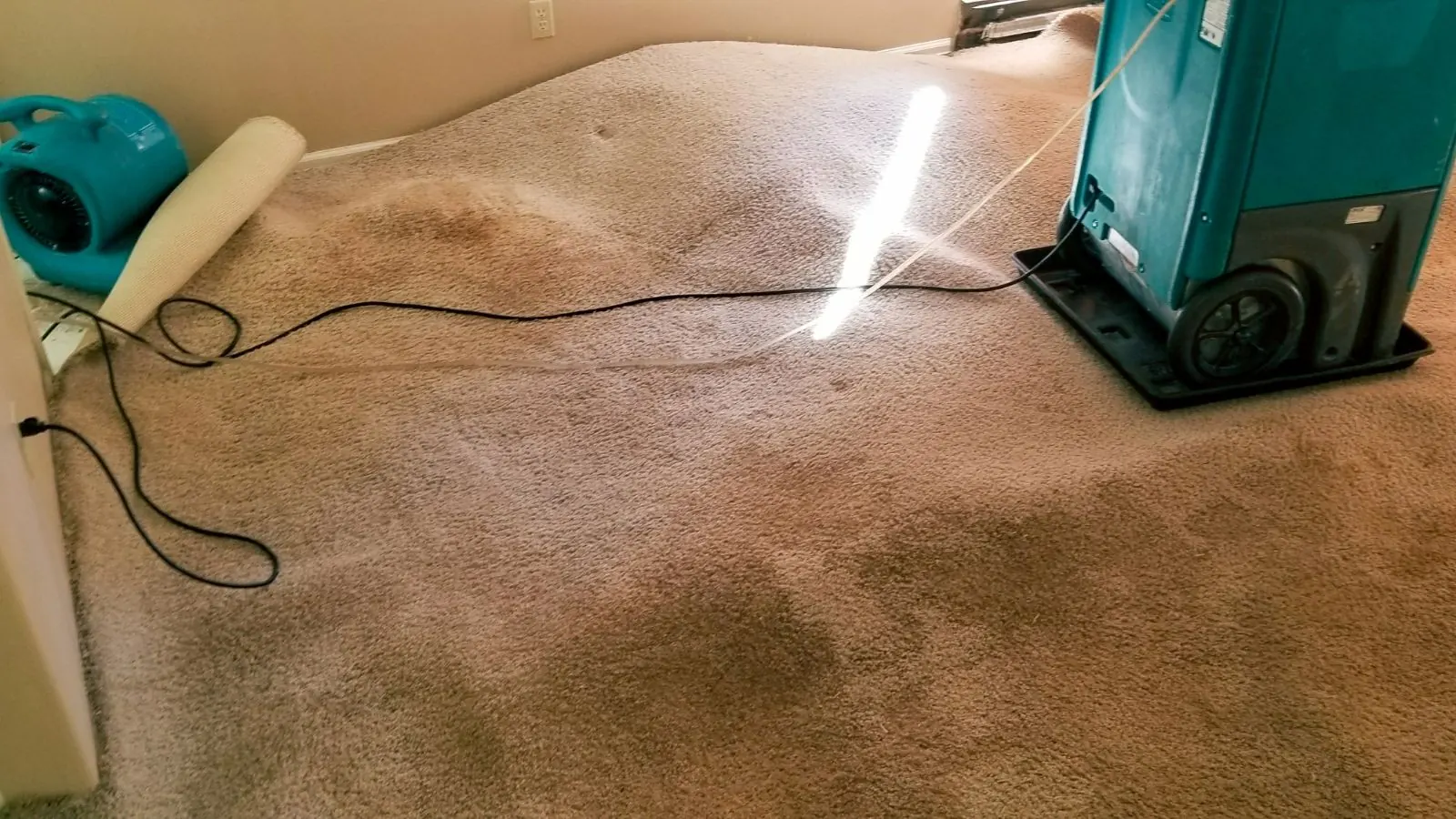
If your carpet is wet, extract water as soon as you can and call for drying. Remove furniture, put foil or blocks under legs and run fans. The pad underneath holds the most water and dries the slowest.
Carpet water damage restoration is the extraction and drying of wet carpet, pad and subfloor, or their removal and replacement when drying is not enough. The water category decides the plan.
Can wet carpet be saved?
| Water type | Carpet | Pad |
|---|---|---|
| Clean water, caught within a day or two | Can usually be dried | Often replaced |
| Gray water from a washer or dishwasher | Sometimes cleaned and dried | Replaced |
| Sewage or flood water | Usually replaced | Replaced |
| Clean water left more than two days | May grow mold or odor | Replaced |
Pad is cheaper to replace than to dry. Crews often pull it and dry the carpet and subfloor separately.
What to do with wet carpet
- Wear boots if the water might be dirty.
- Do not walk on wet carpet near outlets or cords.
- Lift furniture off the carpet and put foil under legs.
- Do not use a household vacuum on wet carpet.
- Take photos and a small sample for your insurer.
How carpet drying works
How wet carpet is handled
- Extract. Truck-mounted or portable units pull water from the carpet and pad.
- Lift. Carpet is lifted from the tack strip and pad is removed if needed.
- Dry. Air movers and dehumidifiers dry the carpet, the slab and the subfloor.
- Clean. Carpet is cleaned and deodorized.
- Reinstall. Carpet is stretched back over new pad.
Basement carpet over a slab is the most common case in Woodridge. See basement water damage cleanup for the full job.
Odors, stains and mold on carpet
Carpet can smell musty in a day or two if it stays wet. Stains from dirty water do not always clean out. If you see growth, stop and see mold remediation before disturbing it.
What happens to carpet in the first 48 hours
Carpet fibers dry quickly, but the backing and pad do not. Within a day, the pad begins to hold odor. Within two days, bacteria and mold become a concern, especially in warm, humid rooms. That is why the first 48 hours decide whether carpet can be saved.
Crews check moisture in the tack strip, the baseboard and the subfloor, not just the carpet face. Wet tack strips and baseboards are common hidden problems. Wood strips stay wet longer than the carpet does.
| Time since the leak | What is usually possible |
|---|---|
| Under 24 hours | Extract, dry in place or lift and dry, often save carpet |
| 24 to 48 hours | Lift and dry, replace pad, carpet may be saved |
| Over 72 hours | Odor and growth risk, replacement is common |
Berber and looped carpets can stretch when wet, while cut-pile carpets often hold their shape. A technician checks the backing for delamination before deciding to reinstall.
Carpet cleaning after drying
Once the carpet and pad are dry, the carpet is cleaned with hot water extraction or a similar method to remove residue and odor. Technicians then groom the pile and check the seams. If the carpet was stretched, it is power-stretched again so it lies flat.
Ask whether the quote includes cleaning and reinstallation. Some quotes cover only extraction and drying, and leave the final steps to a carpet installer.
Carpet soaked by outside water is handled under flood damage cleanup, which has stricter rules for disposal.
What affects carpet restoration cost
- Square footage and how many rooms are wet.
- Water category.
- Whether pad must be replaced.
- Drying days and equipment count.
- Reinstallation or replacement carpet.
Want your real number? Call with the room size and what caused the water. The scope and price are explained before work starts.
Call (630) 580-6401Covered losses often include carpet and pad. Keep samples and photos for your claim.
Carpet water damage questions from Woodridge homeowners
Clean water carpet should be dried within one to two days. After that, odor and mold risk rise.
Usually yes. Pad holds water and dries slowly. It is inexpensive compared with the risk.
Usually it is removed. Sewage is Category 3 water and porous materials are typically discarded.
Moisture may remain in the pad or subfloor. A meter reading finds it.
If the loss is covered, often yes. Read your policy and ask your insurer.
For a small clean spill, yes. For larger spills or wet pad, professional equipment is needed.
Sources and standards: the ANSI/IICRC S500 Standard for Professional Water Damage Restoration, which defines water categories, drying classes and goals, and consumer guidance from the Illinois Department of Insurance on homeowners coverage. These are general references and not a promise of coverage or a result.