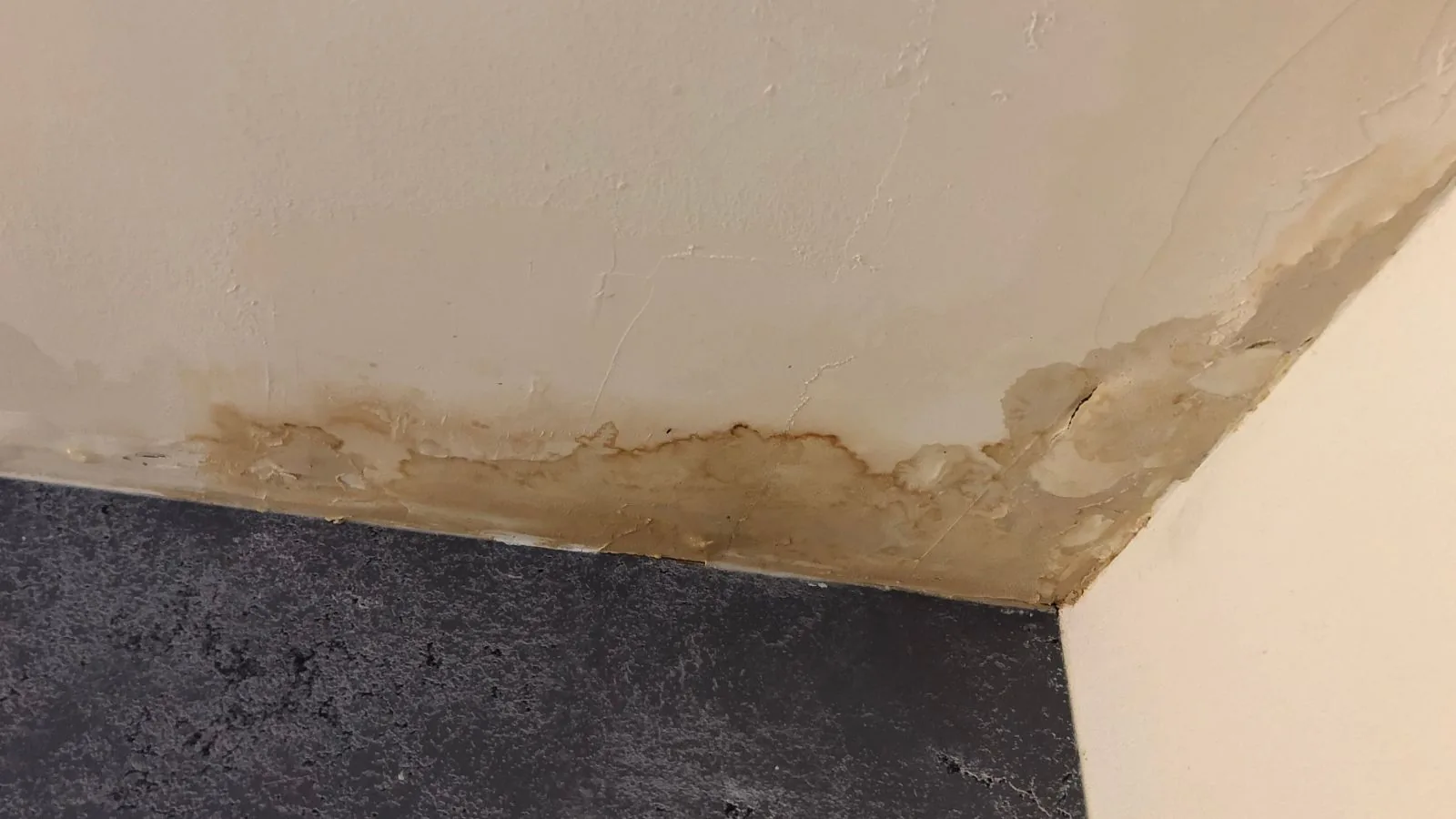
If a ceiling is sagging or dripping, keep everyone out from under it and call the 24/7 line. A bulge can hold gallons of water and drop without warning. Place a bucket below, and if safe, poke a small hole in the bulge to release water in a controlled way.
Ceiling water damage repair is the work of drying a wet ceiling and the space above it, removing drywall or insulation that cannot dry, and rebuilding the ceiling surface. It also owns roof leaks, because the symptom is the same.
Ceiling emergency: signs the ceiling may fail
- A brown or yellow ring that grows over days.
- A bulge or a sag in the drywall.
- Peeling paint, bubbles or a drip from a light fixture.
- A musty smell in the room below an attic or bathroom.
If water is coming through a light or a fan, switch off that circuit at the panel only if the panel is dry and reachable. Otherwise stay out and call the electric utility.
What to do before a ceiling gives way
- Keep people and pets out from under a sagging or bulging ceiling.
- Place a bucket under any drip and move furniture aside.
- Switch off the circuit for a light or fan that is wet, only if the panel is dry.
- Do not stand on a wet floor under a ceiling that is dripping near wiring.
- Photograph the stain, then call for help.
Where the water comes from above
A ceiling is the end of the water's path, not the start. Water can come from a roof leak, an upstairs bathroom, a supply line or a drain, an HVAC unit in the attic or condensation. A crew follows the stain upward to the source with moisture readings and thermal imaging.
| Source | What it looks like | Where to look |
|---|---|---|
| Roof leak | Stains after rain, worse near the edge or valley | Roof decking, flashing, attic insulation |
| Upstairs bathroom | Stain under tub, toilet or sink | Supply lines, drain, wax ring, tub overflow |
| Supply line in the ceiling | Constant drip or sudden flood | Joist bays and fittings |
| Attic HVAC | Stain near a vent or air handler | Condensate line and drain pan |
Roof leaks in Woodridge homes
Roof leaks have no separate page here because the damage ends up on the ceiling. Water enters through damaged shingles, flashing, vents or chimneys, soaks decking and insulation and then drips through the ceiling.
Chicago-area weather tests roofs hard. Heavy rain, freeze and thaw cycles and wind can lift shingles and open seams. A roofer repairs the roof. A restoration crew dries the attic, removes wet insulation and repairs the ceiling. For storm damage to a whole home, see storm water damage cleanup.
Do not climb on a wet or icy roof. Cover the damaged area with a tarp only if you can do it from the ground or a stable position.
Drying and repairing a wet ceiling
Crews remove saturated drywall and insulation, dry the framing with air movers and dehumidifiers and confirm moisture readings before a new ceiling goes up. Painting over a stain does not stop it, and trapped moisture grows mold.
If the water has soaked the wall below, see wall and drywall water damage repair.
If the stain started with a plumbing failure above, see burst pipe water damage for the first steps.
What affects ceiling repair cost
- Source of the water and whether it is still active.
- Size of the wet area and the number of rooms below.
- Whether insulation, drywall or framing must be replaced.
- Access, such as a vaulted ceiling or an attic that is hard to reach.
- Texture, paint and finish needed to match the ceiling.
Want your real number? Call with photos or a description of the stain. The scope and price are explained before work starts.
Call (630) 580-6401Sudden leaks are often covered. Roof damage from wear is often not. Check your policy and your insurer before you repair.
Ceiling water damage questions from Woodridge homeowners
Yes. The line is open 24/7. If a ceiling is sagging or dripping, keep clear, place a container below and call. The dispatcher will arrange same-day response when available. No arrival time is promised.
Not until the source is fixed and the ceiling is dry. Paint hides the stain and traps moisture. If the stain returns, there is still water above.
Yes. Wet drywall is heavy and can collapse. Stay out from under it, and have it opened up in a controlled way. A crew will drain and remove it.
A roofer repairs the roof. The restoration crew dries the attic and ceiling and repairs the interior damage. Both jobs are needed, and drying should not wait for the roof.
If the leak was sudden and accidental, often yes. Damage from a worn roof or a long-term leak often is not. Read your policy and ask your insurer.
Drying takes several days. Repairs such as drywall, texture and paint take a few more days after the framing is dry.
Sources and standards: the ANSI/IICRC S500 Standard for Professional Water Damage Restoration, which defines water categories, drying classes and goals, and consumer guidance from the Illinois Department of Insurance on homeowners coverage. These are general references and not a promise of coverage or a result.