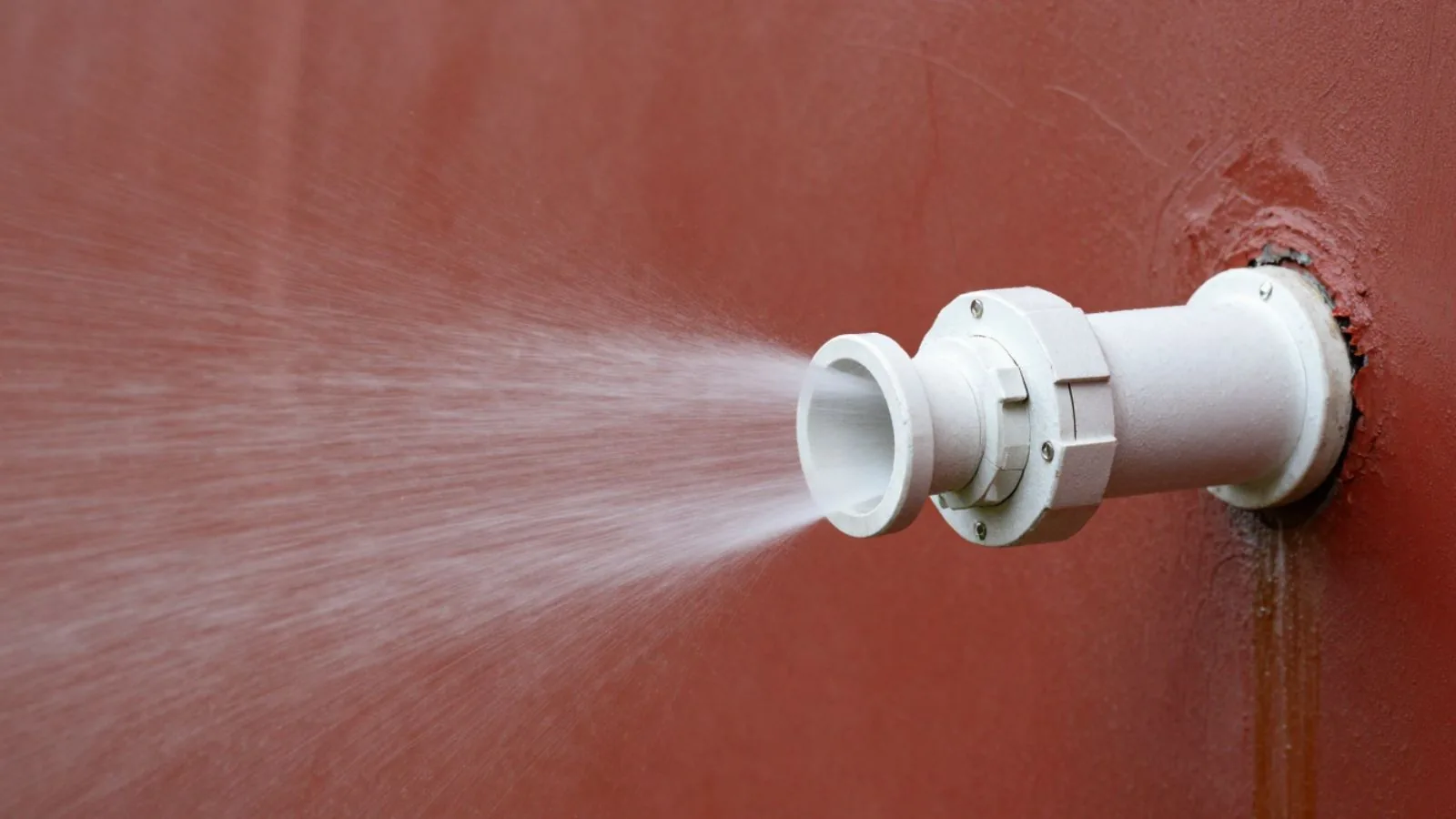
If a frozen pipe has started leaking, close the main water valve and call the 24/7 line. The leak usually appears when the ice melts, so the damage can start hours after the freeze that caused it.
Frozen pipe water damage is the flooding and soaking that happens when water freezes in a line, expands and splits the pipe wall. The split stays sealed by ice until the temperature rises.
Frozen pipe emergency: thaw leaks and what to do
A pipe that is frozen but not yet leaking is still a risk. Keep the heat on, open the cabinet doors under the sink and leave a faucet dripping slightly. Do not use an open flame, and do not thaw a pipe you cannot reach. Call a plumber for a pipe in a wall.
If water appears, treat it like a burst line. Shut off the main, drain the system at the lowest faucet and keep power away from wet areas. The 24/7 line can arrange extraction and drying while the plumber repairs the split.
Frozen pipe checklist for cold nights
- Keep the thermostat at the usual daytime setting, even when you are away.
- Open cabinet doors under sinks on exterior walls to let warm air reach the pipes.
- Disconnect garden hoses and shut off outdoor spigot lines for winter.
- Know where the main shutoff is and make sure everyone in the house can find it.
- If water stops flowing from a tap on a very cold night, assume a pipe is frozen and call a plumber.
Where frozen pipes happen in Chicago-area homes
Pipes freeze where cold air reaches them. That means exterior walls, unheated garages, crawl spaces, attic runs and lines near foundation vents. Kitchens and bathrooms on outside walls are the most common places for a split.
Chicago-area winters bring many nights below freezing, and an unheated run can freeze on any of them. A single hard cold snap is enough.
| Where it froze | Typical damage | What to expect from cleanup |
|---|---|---|
| Exterior wall behind a sink | Wet cabinet back, wet drywall, soaked insulation | Extraction, open the wall, dry the cavity |
| Unheated garage | Wet floor, stored items and drywall | Pump water, move contents, dry framing |
| Attic run | Wet insulation and ceilings below | Remove wet insulation, dry the ceiling, see ceiling repair |
| Outdoor spigot line | Water inside the wall near the hose bib | Moisture mapping, dry the wall base |
Drying a house after the thaw
Once the split is fixed, crews remove standing water and measure moisture in walls and floors. If insulation or drywall is soaked, it is removed. Air movers and dehumidifiers dry the rest. Ceilings that took the water are covered on the ceiling water damage repair page.
Because the leak can start in a part of the house you rarely visit, moisture meters and thermal imaging matter. They find water behind finished walls that looks dry on the surface.
For how the structure is dried after the leak is fixed, see structural drying.
What affects frozen pipe cleanup cost
- How long water ran after the thaw before it was found.
- Whether the leak was in a finished wall, an attic or a garage.
- How much insulation and drywall were soaked.
- How many days of drying equipment are needed.
- Repair scope after drying, which is priced separately.
Want your real number? Describe where the pipe froze and how long water ran. The scope and price are explained before work starts.
Call (630) 580-6401Frozen pipe damage is usually sudden, and many homeowners policies cover it, though maintenance neglect, such as leaving a home unheated, may change that. Check your policy and call your insurer. If you are away in winter, see burst pipe water damage for steps after a line splits.
Frozen pipe questions from Woodridge homeowners
Yes. The line is open 24/7, including cold weekends and holidays. Shut off the main valve, call, and the dispatcher will explain safety steps and arrange same-day response when available. No arrival time is promised.
Ice inside the pipe plugs the crack. When the ice melts, water runs through the split under normal pressure. That is why many freeze leaks are found on a warm afternoon after a cold night.
A hair dryer on low heat, kept dry and moved along an exposed pipe, is safer than a flame. Never use an open flame, and never thaw a pipe in a wall yourself. Call a plumber if the pipe is not reachable.
Often yes if the freeze was sudden and the home was heated. Damage from neglect, such as an unheated vacant house, may be excluded. Read your policy and ask your insurer.
Look for a damp spot, bubbling paint, a musty smell or a drop in water pressure. A moisture meter or thermal camera confirms it. Shut off the main if you see water and call for help.
Drying usually takes several days, depending on how much water reached walls and floors. Equipment stays until moisture readings return to a dry standard.
Sources and standards: the ANSI/IICRC S500 Standard for Professional Water Damage Restoration, National Weather Service Chicago snow normals and the Illinois Department of Insurance.