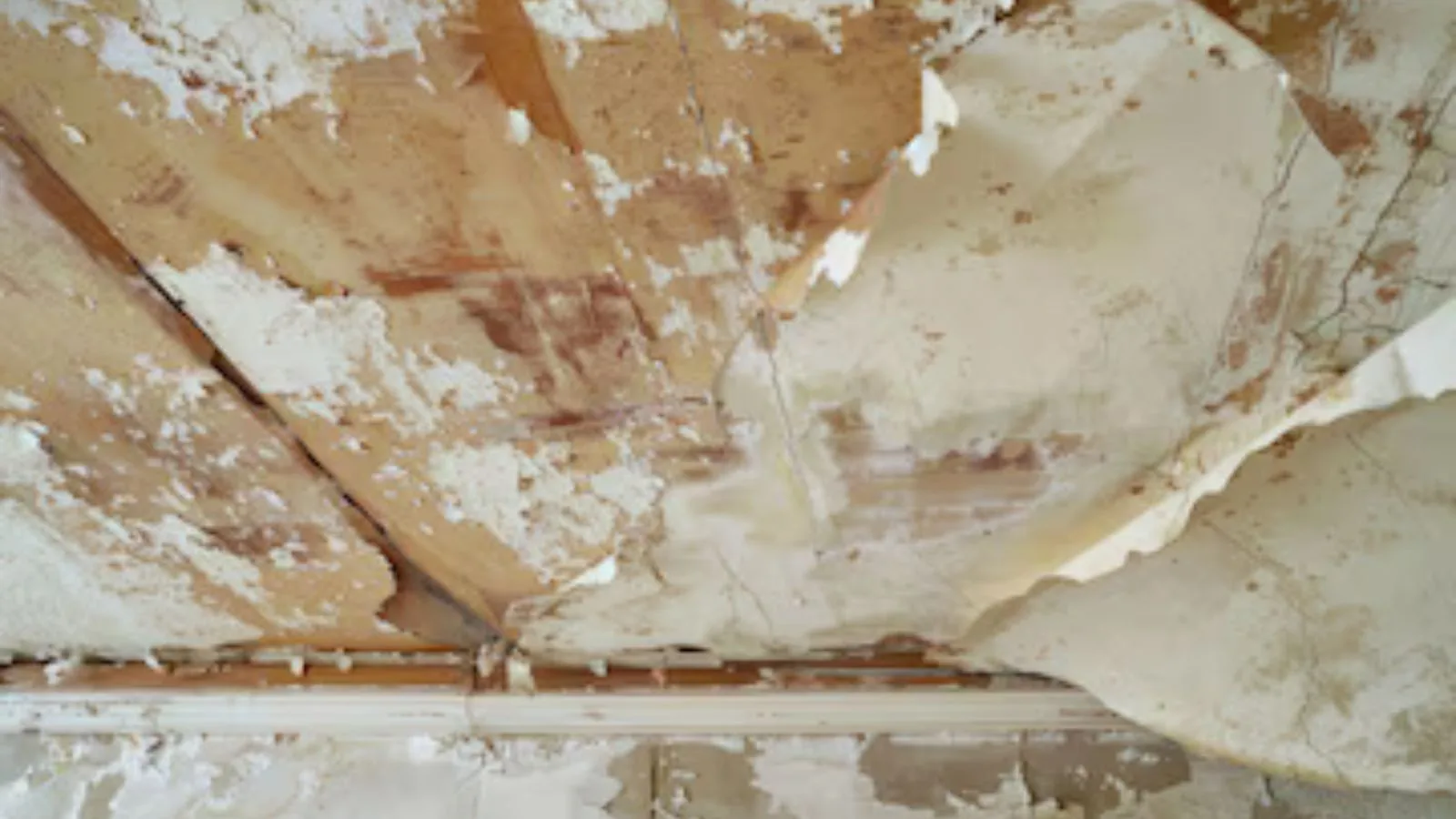
If a wall is wet, find and stop the source, then call. Do not paint over a stain. Remove baseboards if you can, to let the wall breathe, and keep the room ventilated. Soft or sagging drywall should not be touched with bare hands.
Wall and drywall water damage repair is the drying, cutting out and replacement of wet gypsum board, insulation and trim, followed by taping, texturing and painting. It covers walls hit by supply leaks, drain leaks, roof water and floods.
How to tell if drywall is ruined
- It feels soft or crumbles when pressed.
- It is sagging, bowed or stained brown.
- Paint is bubbling or peeling.
- There is a musty smell near the wall.
- Seams are showing or fasteners have popped.
Light staining on a firm wall may dry. A wall that was soaked for more than a day, or that held dirty water, is usually replaced.
What to do before opening a wet wall
- Shut off the water source and, if safe, the power to nearby outlets.
- Do not cut into a wall that may hold wiring or pipes without checking.
- Wear gloves and a dust mask when removing wet drywall.
- Bag wet material and keep it out of living areas.
- Photograph the wall before and after it is opened.
Dry it or cut it out
| Condition | Can it be dried? | Action |
|---|---|---|
| Damp, firm, clean water, caught early | Often yes | Dry with air movers, injection drying |
| Soft, swollen, stained | Rarely | Cut out and replace |
| Contaminated water | No | Remove and replace |
| Behind tile or cabinets | Depends | Open a small section to check |
Insulation inside the wall holds water. If the wall is opened, wet insulation is removed and the cavity is dried before closing.
Repair after drying
Once readings are dry, new drywall is hung, taped, mudded and sanded. Texture and paint are matched to the room. Fresh drywall over a wet cavity will fail, so drying always comes first.
Ceilings are handled differently. See ceiling water damage repair. For leaks that start at a fixture, see burst pipe water damage.
Hidden damage inside walls
Water often runs down inside a wall cavity and pools at the bottom plate. The face of the drywall may look fine while the insulation and framing stay wet. A moisture meter and thermal camera trace the path without tearing open the whole wall.
Crews often drill small holes or remove baseboards to check the cavity. If the wall is wet inside, they dry it with injection drying or open a section. Closing a wet wall over trapped moisture invites rot and odor.
Matching texture and paint
After new drywall goes in, the seams are taped, mudded and sanded. Texture is sprayed or hand applied to match the room. Paint is blended across a whole wall for a clean finish. A good repair is one you cannot find after painting.
- Ask whether the quote includes texture and paint.
- Ask how many coats of primer will cover the patch.
- Ask whether the entire wall will be repainted.
- Allow time for each coat of mud to dry between sanding.
For how the framing is dried before new drywall goes in, see structural drying.
What affects drywall repair cost
- Linear feet of wall that must be cut out.
- Insulation and framing condition.
- Drying days and equipment.
- Texture matching and paint.
- Trim and baseboard replacement.
Want your real number? Call with photos or a description of the wall. The scope and price are explained before work starts.
Call (630) 580-6401Sudden leaks are often covered. If a claim is filed, keep photos of the wall before and after it is opened.
Wall and drywall questions from Woodridge homeowners
Clean water caught early can often be dried. Soft, swollen or contaminated drywall should be replaced.
Drywall can wick water several inches above the waterline. Crews often cut above the visible line and check with a meter.
Not until the source is fixed and the wall is dry. Paint hides stains and traps moisture.
Small holes let air in to dry the cavity or allow inspection. They are patched after readings are dry.
Often, if the water was sudden and accidental. Slow leaks and wear usually are not. Ask your insurer.
Drying takes three to five days. Repairs take a few more days for mudding, sanding and painting.
Sources and standards: the ANSI/IICRC S500 Standard for Professional Water Damage Restoration, which defines water categories, drying classes and goals, and consumer guidance from the Illinois Department of Insurance on homeowners coverage. These are general references and not a promise of coverage or a result.