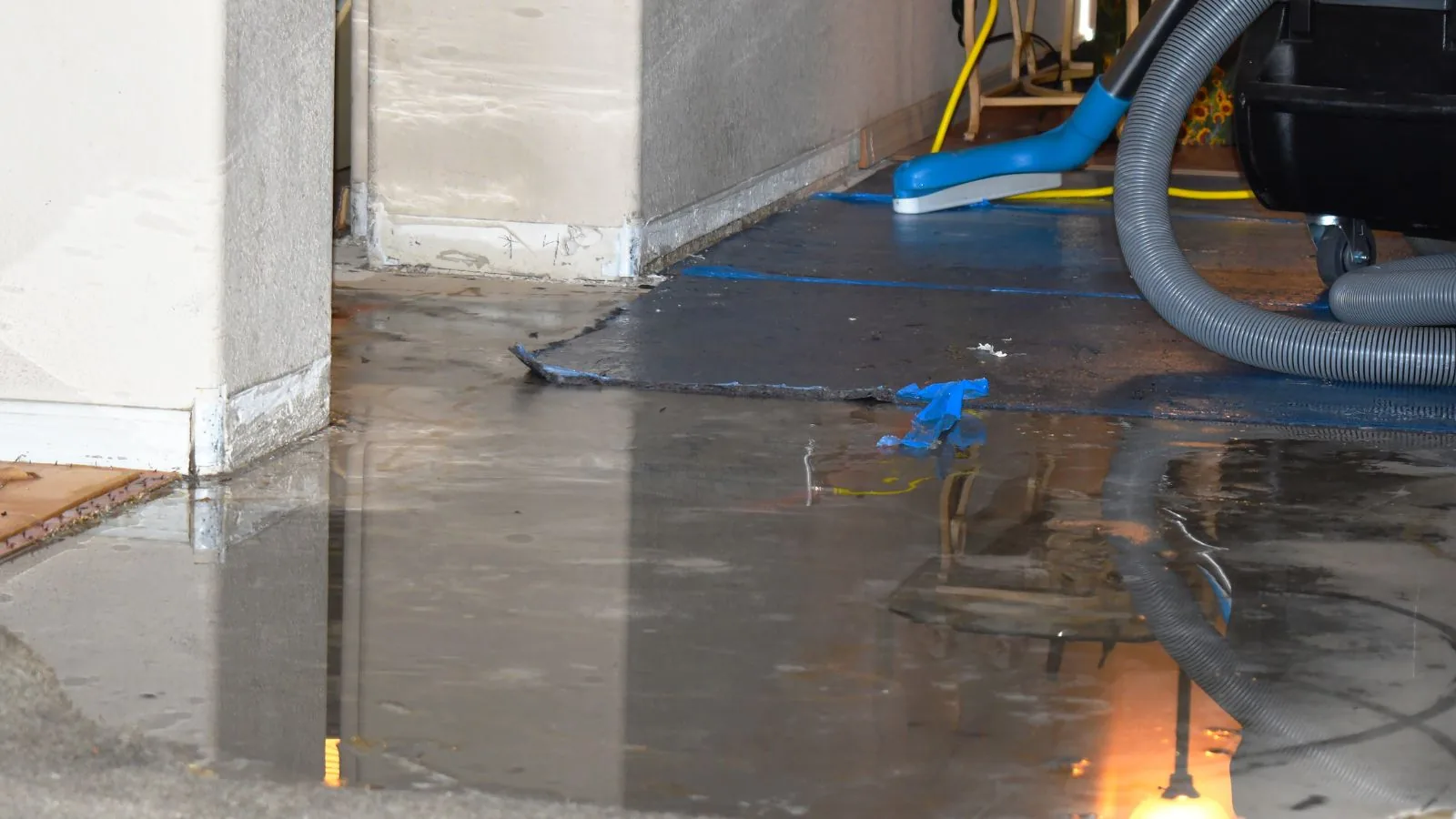
If water is standing in your home, call now. The line is open 24/7, including nights and weekends. While you wait, stop the source if you can, keep people and pets out of the water and lift small items off the floor.
Water extraction is the removal of standing water from a building using pumps, wet vacuums and extraction units. It is the first physical step of water damage restoration, and it comes before any drying equipment is set.
When standing water is an emergency
Any water that covers outlets, reaches a wall base or soaks carpet is an emergency. The longer it sits, the farther it wicks into drywall, trim and subfloor. Water that came from a drain, a toilet or a flooded yard carries contamination and needs gloves, boots and careful disposal.
Water near a breaker panel, a furnace or a plugged-in appliance is a shock risk. Stay out, leave the power alone unless the panel is dry and reachable, and call the electric utility or 911 before you call for extraction.
Do this while the crew is on the way
- Shut off the water at the main valve if a pipe or hose is still running.
- Photograph the water line on walls and furniture before anything moves.
- Pull up area rugs and move small furniture to dry ground if it is safe to lift.
- Open interior doors so a crew can reach every wet room.
- Do not run a household vacuum on wet floors.
How water is pulled out of a Woodridge home
Crews match the tool to the depth. Submersible pumps clear deep water in basements and garages. Portable electric extractors with wands pull water off carpet and hard floors. Squeegee wands and wet vacuums finish the edges and corners.
Carpet and pad are checked early. Pad holds water like a sponge and often has to come out even when the carpet can be saved. Extraction is repeated in passes until the machines stop pulling water.
| Situation | Typical equipment | Why it fits |
|---|---|---|
| Deep water in a basement | Submersible pump with discharge hose | Moves large volume quickly to a safe drain point |
| Wet carpet and pad | Portable extractor with weighted wand | Pulls water out of fibers and pad without tearing up the room |
| Wet hard floor | Wet vacuum and squeegee | Clears thin water from tile, vinyl and sealed floors |
| Water under flooring | Floor drying system with suction | Pulls trapped water from beneath boards or laminate |
Extraction first, drying second
Removing visible water does not make a building dry. Moisture stays in framing, drywall and subfloor after the puddles are gone. That is why structural drying and dehumidification follows extraction on nearly every job.
A crew uses moisture meters and thermal imaging to see where water went. Those readings set the plan for air movers and dehumidifiers, and they give you records for your insurer.
Where Woodridge extraction calls come from
Sump pump failures during heavy storms, supply lines that split, water heaters that fail and basement floor drains that back up are the usual sources. If the water entered from outside, see flood damage cleanup for how river and surface water are handled.
The East Branch DuPage River runs near Seven Bridges. For river conditions, check the National Weather Service gauge and the FEMA flood map for your address. If your sump pump is running constantly, call early before it is overwhelmed.
What affects extraction cost
- Depth and volume of water, which sets pump size and hours on site.
- Water category, because gray water and sewage need protective gear and disposal.
- Number of rooms and the square footage that is wet.
- Whether carpet and pad must be lifted and removed.
- How many extraction passes and follow-up visits are needed.
Want your real number? Call with the source, the depth and the rooms affected. The scope and price are explained before work starts.
Call (630) 580-6401Sudden and accidental water is often covered by homeowners insurance, and flood is usually excluded. Keep photos of the water level and ask your insurer what your policy covers.
Once the water is out, carpet restoration and wall repair cover what happens to the materials that were soaked.
Water extraction questions from Woodridge homeowners
Yes. The line is open 24/7, including weekends and holidays. Call from a dry spot, and the dispatcher will explain safety steps and arrange same-day response when available. No arrival time is promised.
Most extraction takes a few hours for a room or two and longer for a flooded basement. Drying follows and usually takes several days. The timeline depends on how much water there is and what it soaked.
Only on small, clean spills and only on a plugged-in outlet that is dry and away from standing water. Do not use a household vacuum on a wet floor. Deep or dirty water should wait for professional equipment.
Often the carpet can be saved if the water was clean and extraction started quickly. The pad underneath is usually replaced. Water from a drain or toilet is treated differently, and carpet is often discarded.
Sudden and accidental water damage is often covered. Gradual leaks and flooding often are not. Read your policy, ask your insurer and keep photos and receipts. Nothing here promises coverage.
Yes. A thin layer still wicks into drywall and baseboards, and carpet pad holds far more water than it looks like. Shallow water is still worth a call so moisture can be measured.
Sources and standards: the ANSI/IICRC S500 Standard for Professional Water Damage Restoration, which defines water categories, drying classes and goals, and consumer guidance from the Illinois Department of Insurance on homeowners coverage. These are general references and not a promise of coverage or a result.