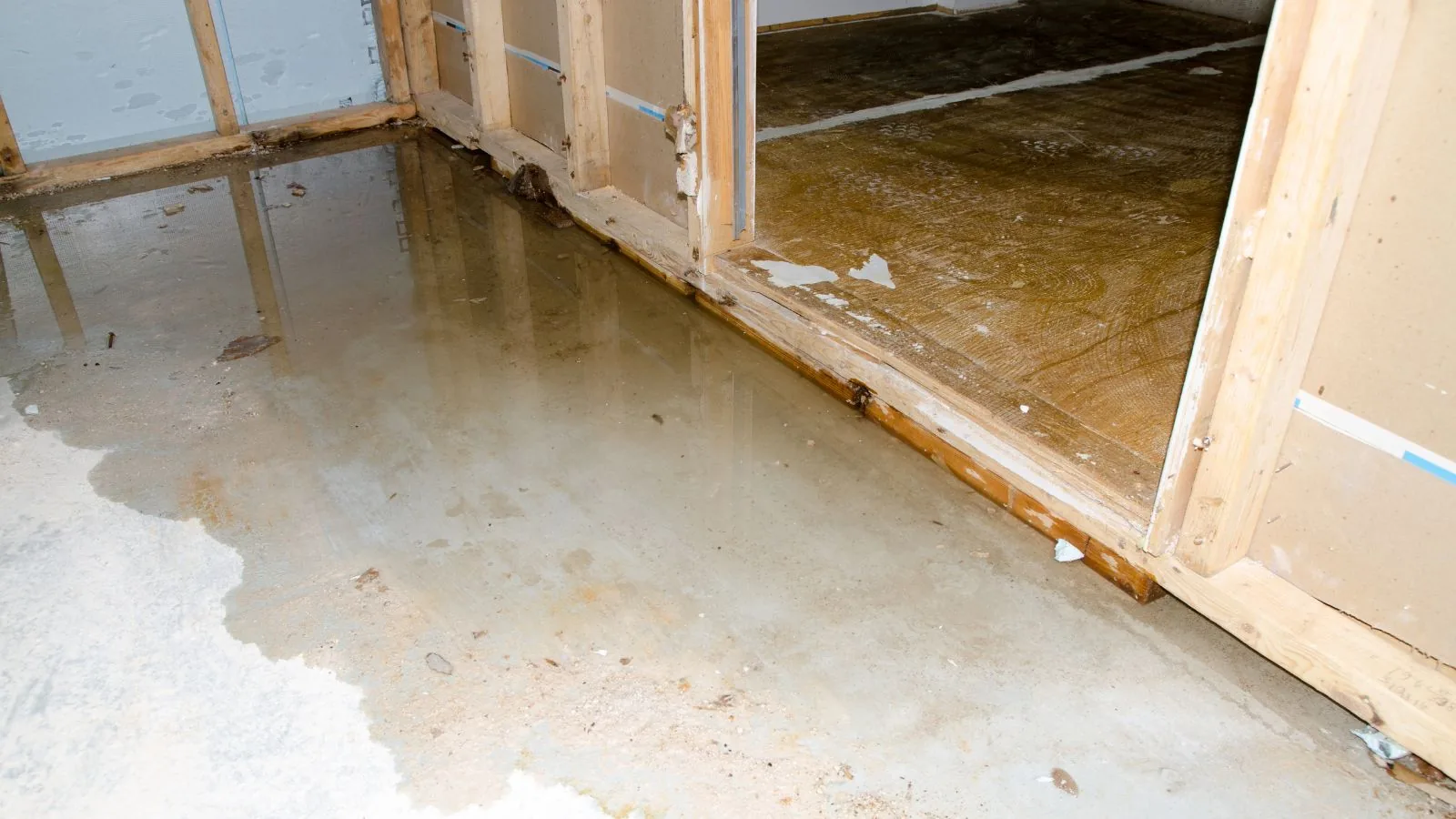
Signs of a slab leak you can notice at home
A slab leak is a leak in a water line that runs under or inside a concrete floor. You may never see it, but you can hear and feel it. Common signs are a warm spot on the floor, a high water bill, the sound of running water when taps are off and damp carpet or baseboards.
- A hot or warm area on a hard floor.
- A water meter that keeps moving when every fixture is off.
- The sound of water running in a quiet house.
- Damp carpet, a musty smell or cracked flooring.
- Low water pressure with no other cause.
To test, shut every fixture off and watch the meter. If it still moves, call a plumber. If water is on the floor, close the main valve and call the 24/7 line.
What to do if you suspect a slab leak
- Shut every fixture off and watch the water meter for movement.
- Close the main valve if water is on the floor.
- Avoid walking barefoot on warm floor spots with damp carpet nearby.
- Do not drill or cut the slab yourself.
- Call a plumber with leak detection equipment.
Slab leak emergency: shutting off and calling
Close the main shutoff to stop water. A slab leak may keep seeping from the line already in the ground, but the flow drops. Call a plumber with leak detection equipment. Call the line for drying of any area the water reached.
Water mains are the Village's concern. For a leak in the street, reports go to the water operator at 630-719-4753. A break inside your property line is the owner's concern.
What a slab leak does to a house
Water travels under the slab and finds the lowest or weakest path. It can wet carpet, lift hardwood and swell baseboards. It can undermine soil beneath the slab over time. Slab leaks apply to buildings with concrete floors poured at ground level, such as additions, garages and some townhomes. If you are not sure how your floor was built, check your plans.
| Floor type | What happens | Repair direction |
|---|---|---|
| Carpet over slab | Pad soaks, musty smell | Remove pad, dry the slab, replace pad or carpet |
| Hardwood or engineered wood | Cupping and buckling | Moisture mapping, dry or replace boards |
| Tile or vinyl | Lifting, cracked grout | Dry the slab, reset tile if the base is sound |
| Slab in garage or addition | Damp concrete and wall base | Dry the slab, check framing |
How drying works after the line is fixed
The plumber locates and repairs the leak, often by rerouting a line through a wall or ceiling. Then crews dry the slab and finish layers. Concrete holds water for weeks, so moisture readings matter. See structural drying and dehumidification for how a slab is dried.
Floors wet from the leak are covered under wet carpet and wet hardwood guidance.
What affects slab leak cleanup cost
- How long water leaked before detection.
- Floor finish over the slab.
- How much carpet, pad or baseboard is wet.
- Drying days for the slab and finish layers.
- Plumbing repair, which is quoted by the plumber separately.
Want your real number? Call with the floor type and the size of the damp area. The scope and price are explained before work starts.
Call (630) 580-6401Slab leaks are sometimes covered, depending on the policy and whether the break was sudden. Read yours, and ask your insurer about access costs.
Slab leak questions from Woodridge homeowners
Look for a warm floor spot, a meter that moves with everything off, the sound of running water or damp carpet. A plumber confirms with leak detection equipment.
Yes. The line is open 24/7. Close the main valve, call, and the dispatcher will arrange same-day response when available. No arrival time is promised.
No. A running toilet, an outdoor faucet or a leaking irrigation line can raise a bill too. Check the meter with all fixtures off to narrow it down.
Some policies cover the resulting water damage, though not always the cost of reaching the pipe. Read your policy and call your insurer.
Long-term leaks can wash out soil under a slab. That is a structural question for an engineer or contractor. Quick repair reduces the risk.
Concrete releases moisture slowly. It can take several days to weeks, depending on how wet it was and what floor covers it.
Sources and standards: the ANSI/IICRC S500 Standard for Professional Water Damage Restoration and the Village of Woodridge for water operator contact information.