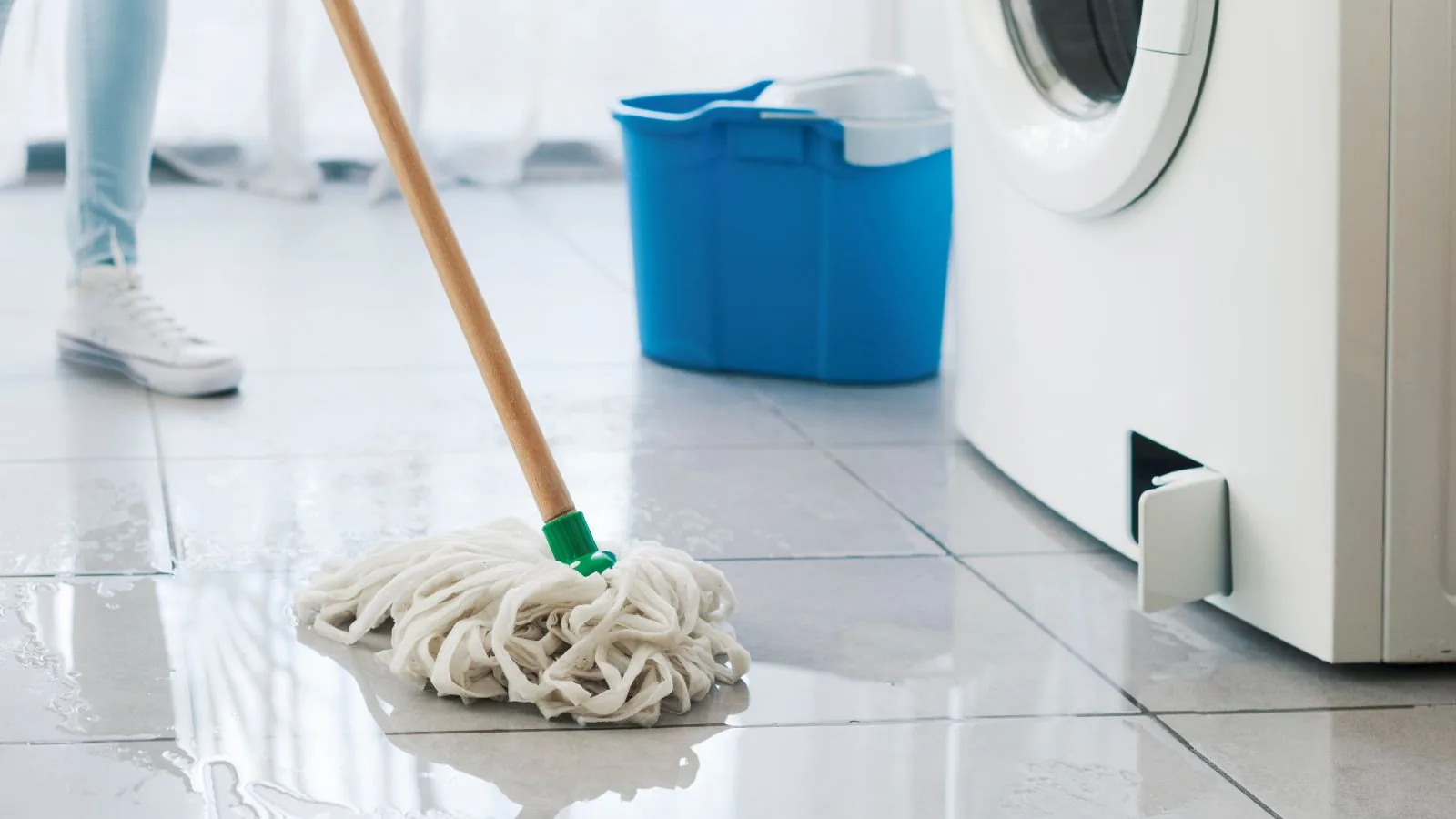
If an appliance is leaking, turn off its water valve, unplug it if the outlet is dry and call the 24/7 line. A burst washer hose can run at full pressure while you are out, so the main valve is the next step if the appliance valve fails.
Appliance leak water damage is the wetting of floors, cabinets and walls caused by a washer, dishwasher, refrigerator line, ice maker or similar fixture. The water is usually clean at first and turns dirty if it sits.
Appliance leak emergency: what to shut off and what to leave
- Washing machine: close both hot and cold valves behind it.
- Dishwasher: shut the valve under the kitchen sink and unplug the unit.
- Refrigerator or ice maker: close the saddle valve on the line and pull the fridge out only if the floor is dry.
- Water softener or utility sink: close the nearest shutoff.
Do not run the appliance again. A small leak that looks fixed can return under pressure. Have the hose or fitting replaced before using it.
What to do when an appliance leaks
- Close the appliance's water valve or the main valve.
- Unplug the appliance only if the outlet and floor are dry.
- Do not run the appliance again until the hose or fitting is replaced.
- Mop and towel dry standing water, then run fans.
- Photograph the hose, valve and damage for your claim.
Why appliance leaks do the most damage when unseen
Most appliance leaks start behind or under the unit. Water runs along the subfloor, under cabinets and into the wall bases before it shows on the surface. A kitchen floor can look dry while the cabinet toe kick and the subfloor are saturated.
Rubber supply hoses are the common failure. They split near the connector, especially at older fittings. Braided metal hoses last longer but can still fail. Replace them on a schedule, and check behind the unit twice a year.
| Appliance | Common leak point | Where water hides |
|---|---|---|
| Washing machine | Supply hose, drain hose, door seal | Under the machine, behind walls, basement ceiling below |
| Dishwasher | Door gasket, inlet valve, hose | Under the cabinet, in the toe kick, in the subfloor |
| Refrigerator | Ice maker line, drain pan | Under the unit, along the floor edge |
| Water softener | Brine line, drain connection | Utility floor and adjoining walls |
How the cleanup works
Crews extract standing water, remove the toe kicks and drill small holes to dry the wall base and cabinet backs. Moisture readings show whether the floor can be saved. Laminate and vinyl often swell, while tile usually dries in place.
Kitchen leaks often reach the cabinets and floor together. See kitchen water damage restoration for those jobs, and hardwood floor water damage repair if the boards have cupped.
A leak from the tank in a utility room is covered on the water heater leak cleanup page.
Attached homes add a step because water can pass a shared wall. The Woodridge Center page covers houses and townhomes there.
What affects appliance leak cleanup cost
- How long the leak ran before it was found.
- Whether water reached cabinets, subfloor or a floor below.
- Flooring type and how much must come up.
- Number of drying days and equipment pieces.
- Cabinet and trim repair after drying.
Want your real number? Call with the appliance, the room and the flooring type. The scope and price are explained before work starts.
Call (630) 580-6401Sudden appliance discharge is often covered by homeowners insurance. Ongoing seepage or a long-term leak often is not. Photograph the appliance and the damage and read your policy before repairs.
Appliance leak questions from Woodridge homeowners
Yes. The line is open 24/7. Close the appliance valve, call, and the dispatcher will arrange same-day response when available. No arrival time is promised.
Washing machine supply hoses and dishwasher connections are common causes, because they run at full line pressure. Refrigerator ice maker lines are small but can leak for weeks behind the unit.
Look for lifted edges, soft spots, a musty smell or a gap between the floor and the cabinet base. A moisture meter or thermal camera confirms it without tearing anything out.
A sudden burst is often covered. Wear, ongoing seepage and maintenance failure may be excluded. The Illinois Department of Insurance says policy exclusions vary, so read yours.
Only after the hose or fitting is replaced and tested. Check the connections after the first cycle and again after a week.
Small leaks dry in two to three days. Leaks into cabinets or a subfloor can take longer. Equipment stays until readings return to a dry standard.
Sources and standards: the ANSI/IICRC S500 Standard for Professional Water Damage Restoration, which defines water categories, drying classes and goals, and consumer guidance from the Illinois Department of Insurance on homeowners coverage. These are general references and not a promise of coverage or a result.