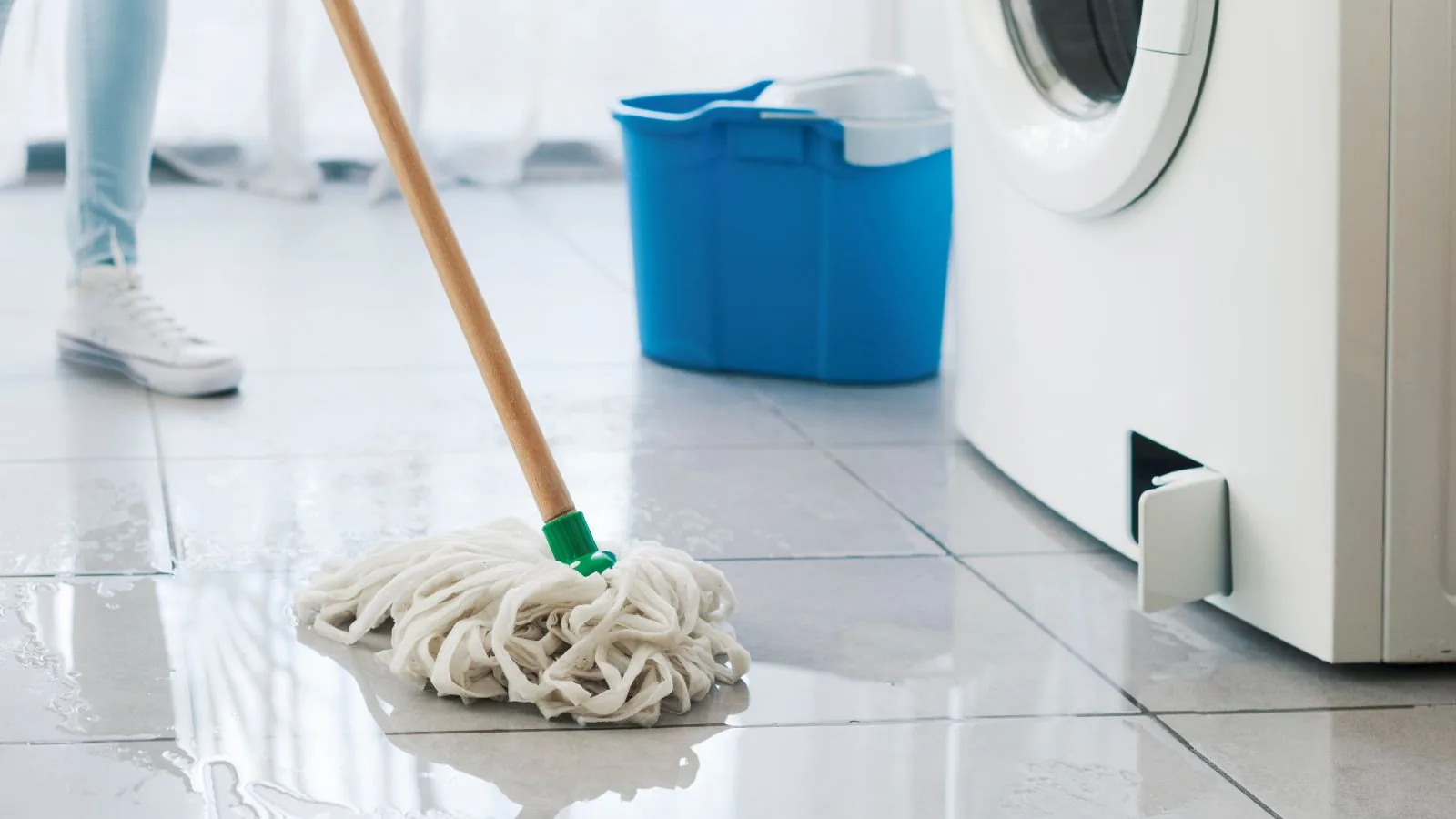
A toilet leak seems small until it reaches the subfloor. Water from a failed seal, a cracked tank or an overflow moves across the floor and into the walls. If the bathroom is above a finished room, it can come through the ceiling.
This guide covers what to do first, where water travels and when to call for drying. Plumbing repairs are for a plumber.
First steps when a toilet leaks or overflows
Stop the water, then protect the room
- Turn the shutoff valve behind the toilet clockwise until it stops.
- Lift the tank lid and raise the float if the tank is overflowing.
- Do not flush again until the cause is found.
- Wear gloves and boots if the water came from the bowl, since it can be dirty.
- Soak up water with towels and move rugs out of the room.
If the water came from the sewer line, many fixtures will back up. Stop using water and see sewage backup cleanup.
Why toilet leaks cause hidden damage
The toilet sits over a wax ring and a flange. When the ring fails, water leaks around the base each time you flush. The leak can run for months. The floor feels soft, the vinyl lifts and a musty smell appears.
A tank sweating or leaking at the supply line is more visible but can still seep into the cabinet or wall.
| Source | Symptom | Where it travels |
|---|---|---|
| Failed wax ring | Water at the base after flushing | Subfloor, ceiling below |
| Cracked tank or bowl | Constant seep | Floor and wall base |
| Supply line or valve | Drip behind the toilet | Wall and cabinet |
| Clog and overflow | Sudden flood | Whole bathroom, adjacent rooms |
Signs the floor is wet below the surface
- Soft or spongy floor near the toilet.
- Rocking toilet or loose bolts.
- Discolored vinyl or lifted tile.
- A stain on the ceiling below.
- A musty smell that stays after cleaning.
These signs suggest water is in the subfloor. A moisture meter confirms it. See ceiling water damage repair if a stain has appeared below.
When to call for drying
Call if water spread beyond the bathroom, if the floor is soft, if the water was dirty or if the leak ran for more than a day. Crews measure moisture, dry the subfloor and wall base and replace what cannot recover.
Skipping drying can lead to rot, odor and mold. A plumber can reset the toilet with a new wax ring once the floor is dry.
Preventing a repeat
- Replace old rubber supply lines with braided ones.
- Check the base of the toilet for dampness each season.
- Fix running toilets promptly.
- Know where the shutoff valve is.
- Do not flush wipes or other items that clog.
Gray water, clean water and dirty water
Not all toilet water is the same. A leak from the supply line is clean water from the pipe. Water from the tank is also clean. Water from the bowl or from a backup is dirty and can carry bacteria. The difference changes how the cleanup is done.
| Source | Water type | How to handle it |
|---|---|---|
| Supply line or valve | Clean | Dry the area, check for hidden moisture |
| Tank | Clean | Dry the area, replace the gasket if needed |
| Bowl overflow | Dirty | Wear gloves, disinfect, remove porous items |
| Sewer backup | Dirty | Stay out and call for professional cleanup |
Disinfect hard surfaces with a household disinfectant after you remove the water. Launder towels and rugs in hot water. Discard anything porous that soaked up dirty water.
Checking the room below
If the bathroom is on an upper floor, check the ceiling below. A brown ring, a bulge or a drip means water has passed through the subfloor. Put a bucket under any drip. Do not poke the ceiling unless you are ready to catch the water.
Toilet leaks in older Woodridge homes
Woodridge has many houses built between 1970 and 1999, with original supply lines and shutoff valves. Valves that have not been turned in years can stick or leak when tested. Exercise them once a year and replace any that weep.
For help in your area, see the Woodridge service area page.
Toilet leak soaked the floor?
Call the 24/7 line. Crews check moisture and dry the subfloor and walls.
Call (630) 580-6401Toilet leak questions from Woodridge homeowners
Look for water around the base after flushing, a loose toilet, a soft floor or a stain on the ceiling below.
Water from the bowl can contain bacteria. Wear gloves and boots, clean with a disinfectant and keep children and pets away.
Many homeowners do, but the floor must be dry and sound. If it is soft, call for drying and repair first.
Sudden overflow is often covered. A slow leak over time is usually excluded. Ask your insurer.
Usually a few days. Wet subfloor takes longer than surface water.
Stop the water, then call a plumber for the repair. If water spread, call the crew too. They can work at the same time.
Sources and standards: the ANSI/IICRC S500 Standard for Professional Water Damage Restoration, which defines water categories, drying classes and goals, and consumer guidance from the Illinois Department of Insurance on homeowners coverage. These are general references and not a promise of coverage or a result.